


Discover folk - the CRM for people-powered businesses
Generating sales leads is the lifeblood of any growing business.
| Main points |
|---|
|
Who this guide is for
If you're a startup founder, solopreneur, or part of a medium-sized sales team, mastering how to find, qualify, and manage leads isn't optional—it's survival.
This guide covers:
- Clear definitions of leads and types
- Lead generation tactics that work
- Lead management workflows (segmentation, nurturing, qualification)
- Top tools with pros, cons, and pricing
What Are Leads in Sales?
👉 A sales lead is any individual or organization that has shown interest in your product or service. Leads typically enter your funnel through marketing campaigns, referrals, signups, or outreach.
Not all leads are created equal, and not all will convert. That's why understanding lead types and how to manage them is crucial for sales teams of any size.
Different Types of Leads
- Cold leads: No prior contact or interest. Often sourced via list building or scraped databases. Require nurturing to convert.
- Warm leads: Some engagement, like visiting your site or downloading a resource. Show buying signals but aren't ready yet.
- Hot leads: Ready to buy; they've requested a demo or spoken to sales. These are high-priority.
- Marketing Qualified Lead (MQL): Identified by marketing as engaged and fitting the ICP, but not yet sales-ready.
- Sales Qualified Lead (SQL): Passed to sales after vetting. Meets key criteria for a sales conversation.
How to Generate Leads in Sales
Lead generation isn't just about collecting emails. It's about targeting the right people, at the right time, with the right message—especially critical for mid-sized sales teams managing multiple campaigns.
Strategies to Manage Leads in Sales
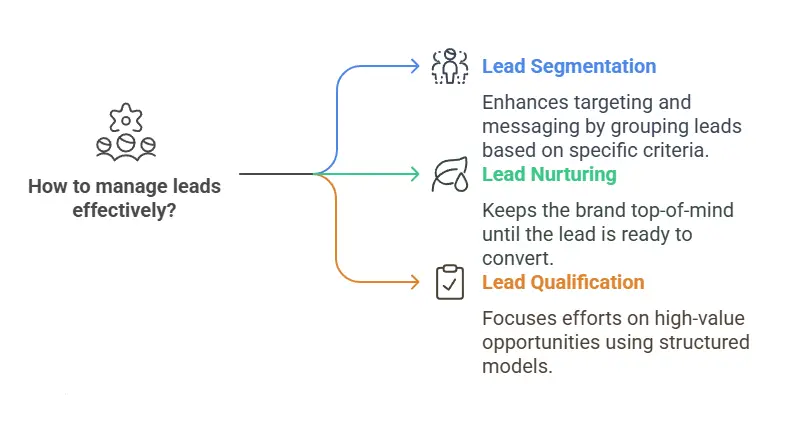
1. Lead Segmentation
Segmentation allows for better targeting and messaging. Group your leads based on:
- Firmographics: Industry, company size, location
- Behavioral data: Pages visited, resources downloaded, time on site
- Source: Cold outreach, referral, paid ad, organic search
- Lifecycle stage: New lead, MQL, SQL, customer
Why it matters: Segmentation boosts engagement and conversion rates by ensuring relevance—particularly important for sales teams managing diverse prospect pools.
2. Lead Nurturing
Lead nurturing helps you stay top-of-mind until a lead is ready to buy.
Tactics include:
- Email drip campaigns tailored to lead interests
- Retargeting ads to re-engage visitors
- Live chat or chatbot follow-ups after site visits
- Personalized content: blog posts, case studies, webinars
Consistency is key. Leads often need 6–8 touchpoints before converting—a process that becomes much easier with proper CRM automation for medium-sized teams.
👉🏼 Try folk now to manage contact-based reminders with your team and never miss a follow-up
3. Lead Qualification
Lead qualification helps your sales team focus on high-value opportunities.
Use models like:
- BANT (Budget, Authority, Need, Timeline)
- CHAMP (Challenges, Authority, Money, Prioritization)
- MEDDIC (Metrics, Economic buyer, Decision criteria, etc.)
You can qualify manually through discovery calls or automatically using lead scoring tools in your CRM.
10 Best Lead Generation and Management Tools
| Tool | Best For | Pricing | Key Strengths |
|---|---|---|---|
| folk CRM | All-in-one lead management for teams of 20-50 people | From $20/mo | Find + manage leads easily with team collaboration |
| Waalaxy | Linkedin outreach and followup | From $21/user/month | Easy setup, pre-built templates, high limits |
| Apollo | B2B contact discovery | From $39/mo | Rich database, automation |
| Hunter | Email finding | Freemium | Easy email verification |
| Smartlead | AI-powered sales outbound and cold emailing tool | From $32/mo | Unlimited warmup + ~300M+ verified B2B profiles with SmartProspect |
| Lemlist | Cold outreach | From $59/mo | Personalized sequences |
| Clay | Enrichment automation | From $149/mo | Smart workflows |
| Instantly | Cold email scaling | From $37/mo | Unlimited sending |
| Wiza | LinkedIn scraping | From $50/mo | Fast lead export from Sales Nav |
| Kaspr | Phone & email enrichment | From $49/mo | Chrome extension simplicity |
1. folk CRM
folk CRM is an all-in-one CRM purpose-built for modern teams. Unlike traditional CRMs, folk combines lead sourcing and contact management into one intuitive interface that scales perfectly for medium-sized sales organizations.
✔️ Pros
- Find leads from LinkedIn, Gmail, and more
- Smart segmentation and tagging perfect for team workflows
- Clean UI built for collaboration and outreach at scale
- Perfect for growing sales teams
- folk mobile app for managing contacts and follow-ups on the go
❌ Cons
- Still growing its integrations ecosystem
Pricing: Starts at $20/month with a 14-day free trial
2. Waalaxy
Waalaxy is a LinkedIn outreach automation tool built for business owners and small B2B teams who want to start outbound without complexity. It helps you find qualified prospects directly on LinkedIn, launch guided outreach sequences, and automate follow-ups — all without requiring RevOps expertise or heavy setup.

✔️ Pros
- Very easy to use, even for beginners
- LinkedIn-native lead sourcing (search, reactions, groups, events)
- Pre-built, guided outreach sequences
- Automated follow-ups on replies or silence
- Unified inbox to manage conversations in one place
❌ Cons
- Focused primarily on LinkedIn (email is secondary)
- Less advanced customization than enterprise tools
Pricing: From $21/user/month
3. Apollo
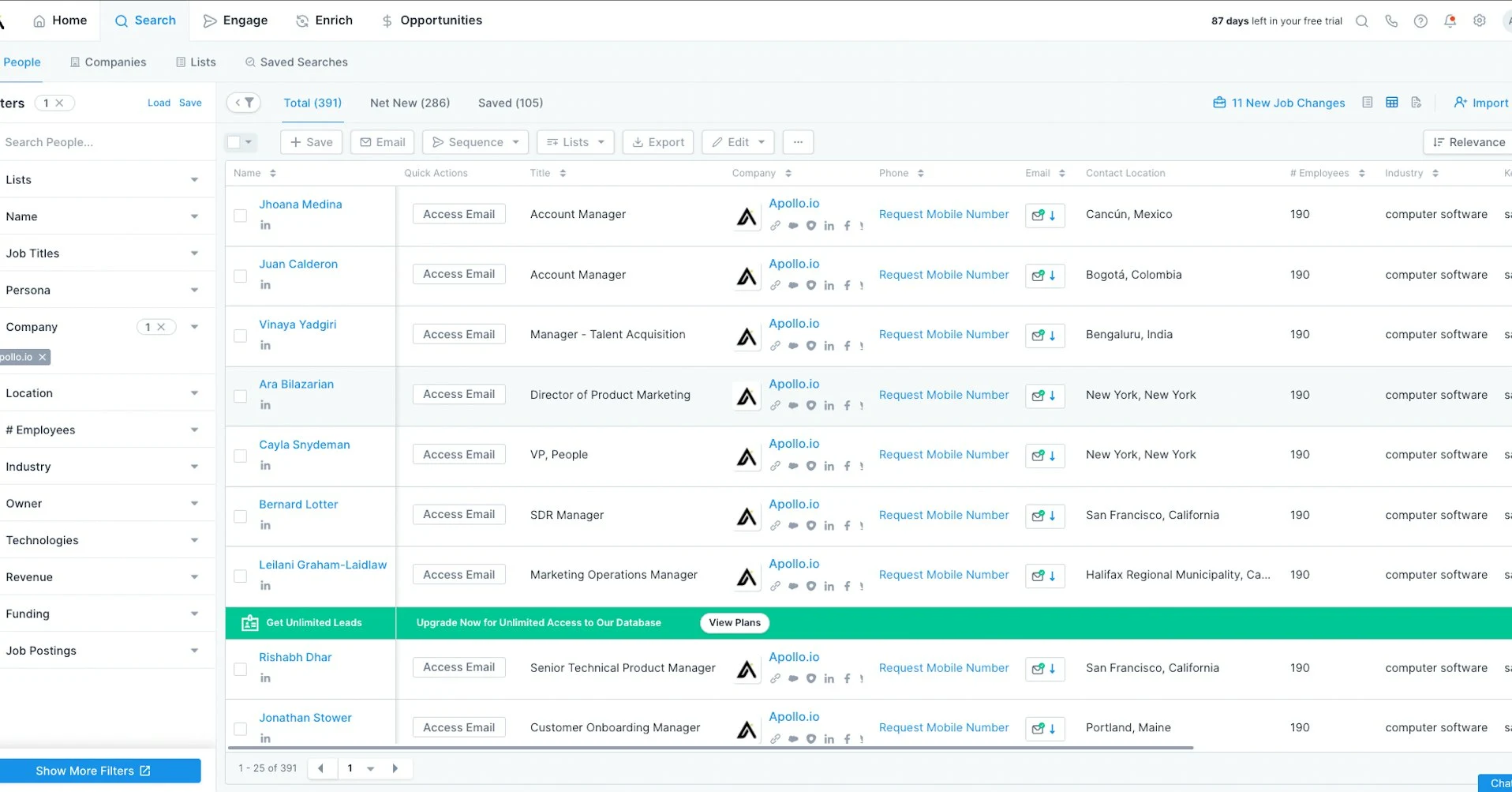
Apollo offers a robust B2B lead database with over 250 million contacts. You can build lists, qualify leads, and launch sequences—all in one platform.
✔️ Pros
- Extensive filtering for list building
- Built-in outreach automation (calls, emails)
- Enrichment features and Chrome extension
❌ Cons
- Steeper learning curve
- Interface can feel dense for beginners
Pricing: Starts at $39/month with limited free plan
4. Hunter.io
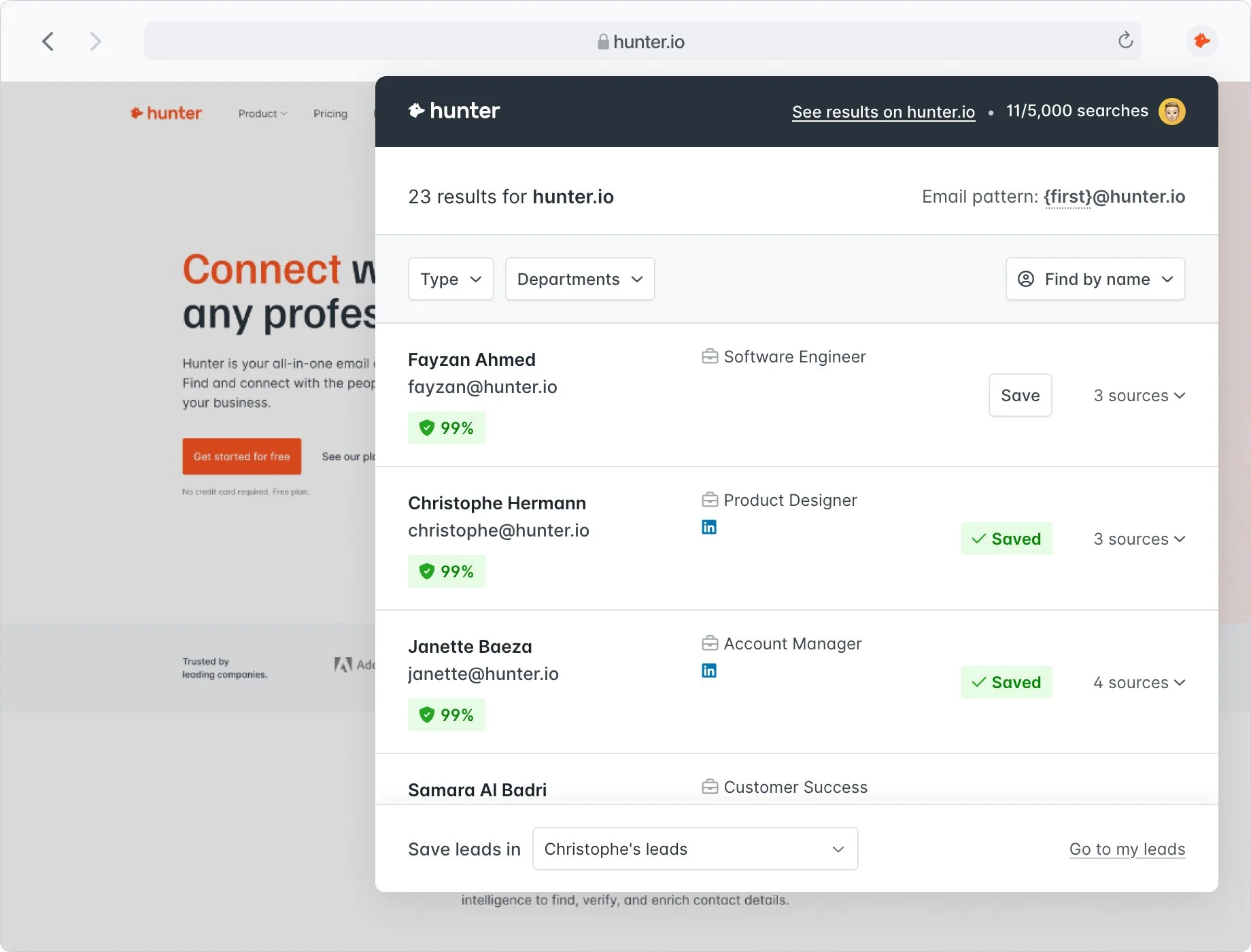
Hunter helps you find professional email addresses from domains, LinkedIn, or names. It's ideal for verifying and enriching contact lists.
✔️ Pros
- Excellent email deliverability tools
- Bulk domain search available
- Trusted by outreach professionals
❌ Cons
- No CRM features
- Limited automation
Pricing: Freemium plan available. Paid plans from $49/month
5. Smartlead
Smartlead is an AI-powered sales outbound and cold emailing tool designed to achieve high deliverability and lead generation for B2B sales teams and agencies.
✔️ Pros
- AI-powered automation and unlimited warmup and domain rotation.
- Access to ~300M+ verified B2B profiles with SmartProspect
- Global analytics and unified master inbox
❌ Cons
- Complex for beginners
- Limited features in the basic plan
Pricing: Starts at $39/month
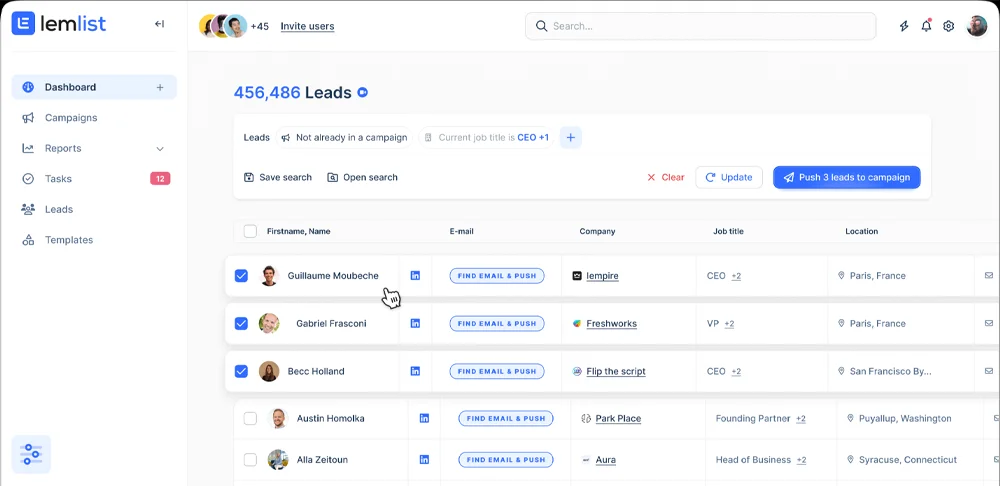
6. Lemlist
Lemlist is built for personalized cold outreach with advanced automation. You can create dynamic email campaigns using images and videos.
✔️ Pros
- Smart personalization at scale
- Powerful analytics
- Deliverability booster features
❌ Cons
- UI not as intuitive as competitors
- Can get expensive for larger teams
Pricing: Starts at $59/month
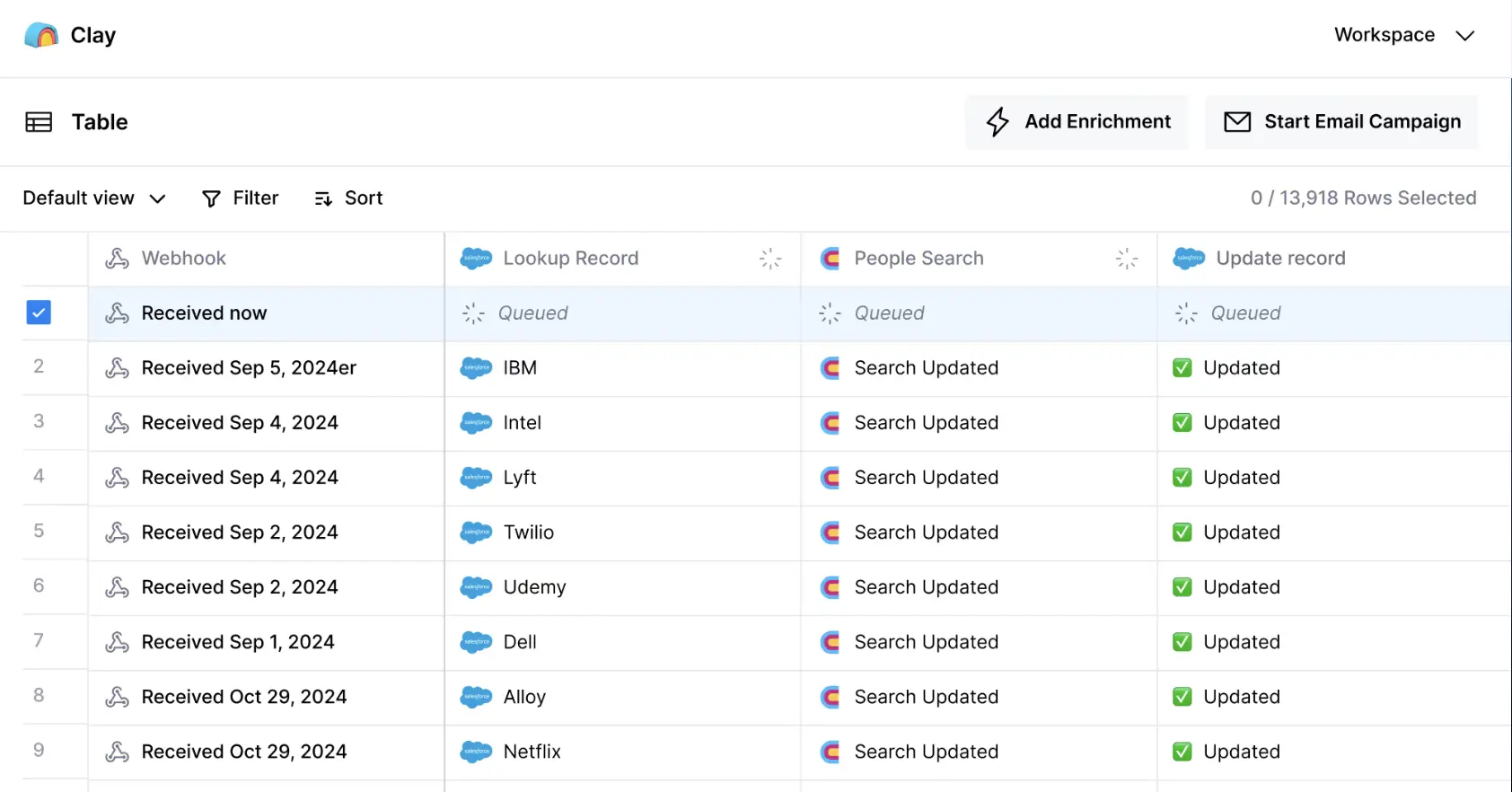
7. Clay
Clay is a data enrichment and automation tool used to build powerful workflows. It connects with dozens of APIs to enrich and sort lead data.
✔️ Pros
- Highly customizable workflows
- Automates lead scoring and research
- Time-saver for data-heavy teams
❌ Cons
- Advanced features require setup time
- High starting price
Pricing: Starts at $149/month
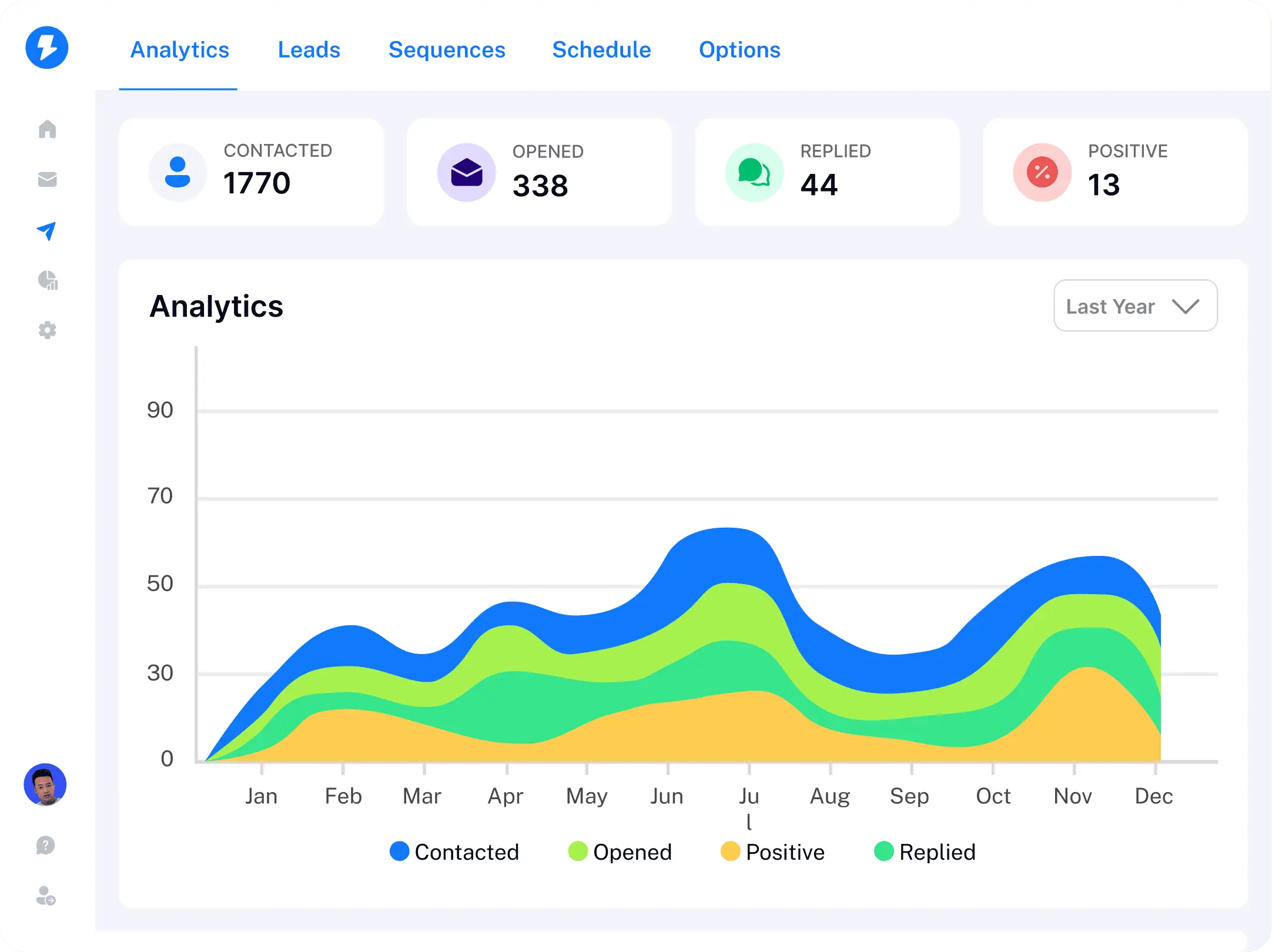
8. Instantly.ai
Instantly.ai is built for sending high-volume cold emails while keeping deliverability strong. Great for agencies and SDR teams.
✔️ Pros
- Send from multiple accounts
- Smart rotation to avoid spam
- Clean analytics dashboard
❌ Cons
- Limited integrations
- No built-in database
Pricing: Starts at $37/month
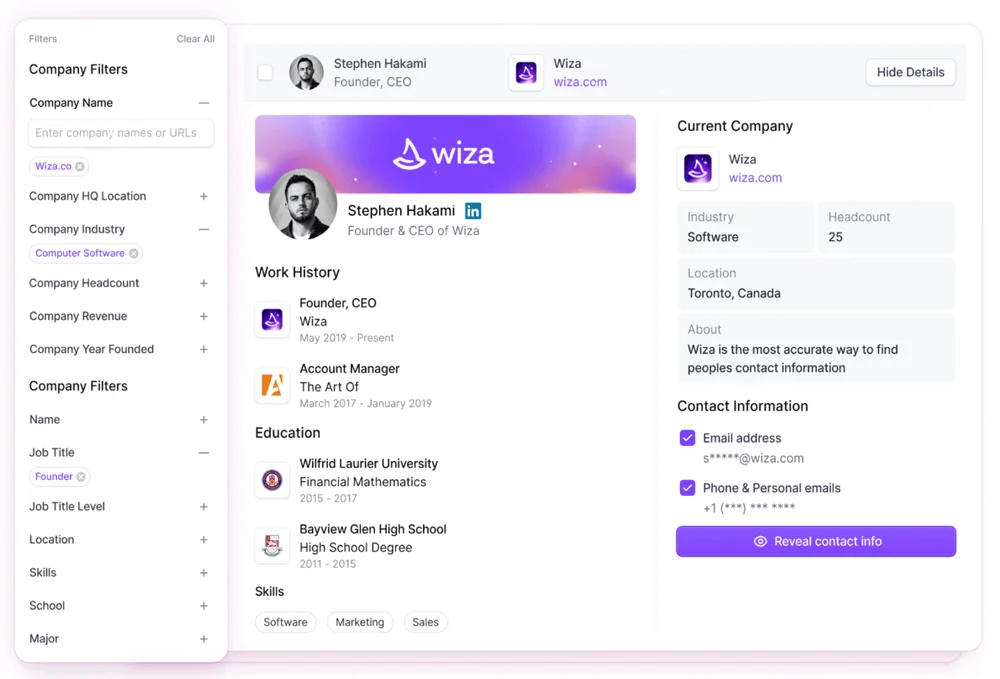
9. Wiza
Wiza lets you export verified emails from LinkedIn Sales Navigator. It's a fast way to turn LinkedIn browsing into actionable lead lists.
✔️ Pros
- Chrome extension works seamlessly with LinkedIn
- Fast and accurate contact info export
- Includes email verification
❌ Cons
- Limited to LinkedIn data
- No native outreach or CRM tools
Pricing: Starts at $50/month
10. Kaspr
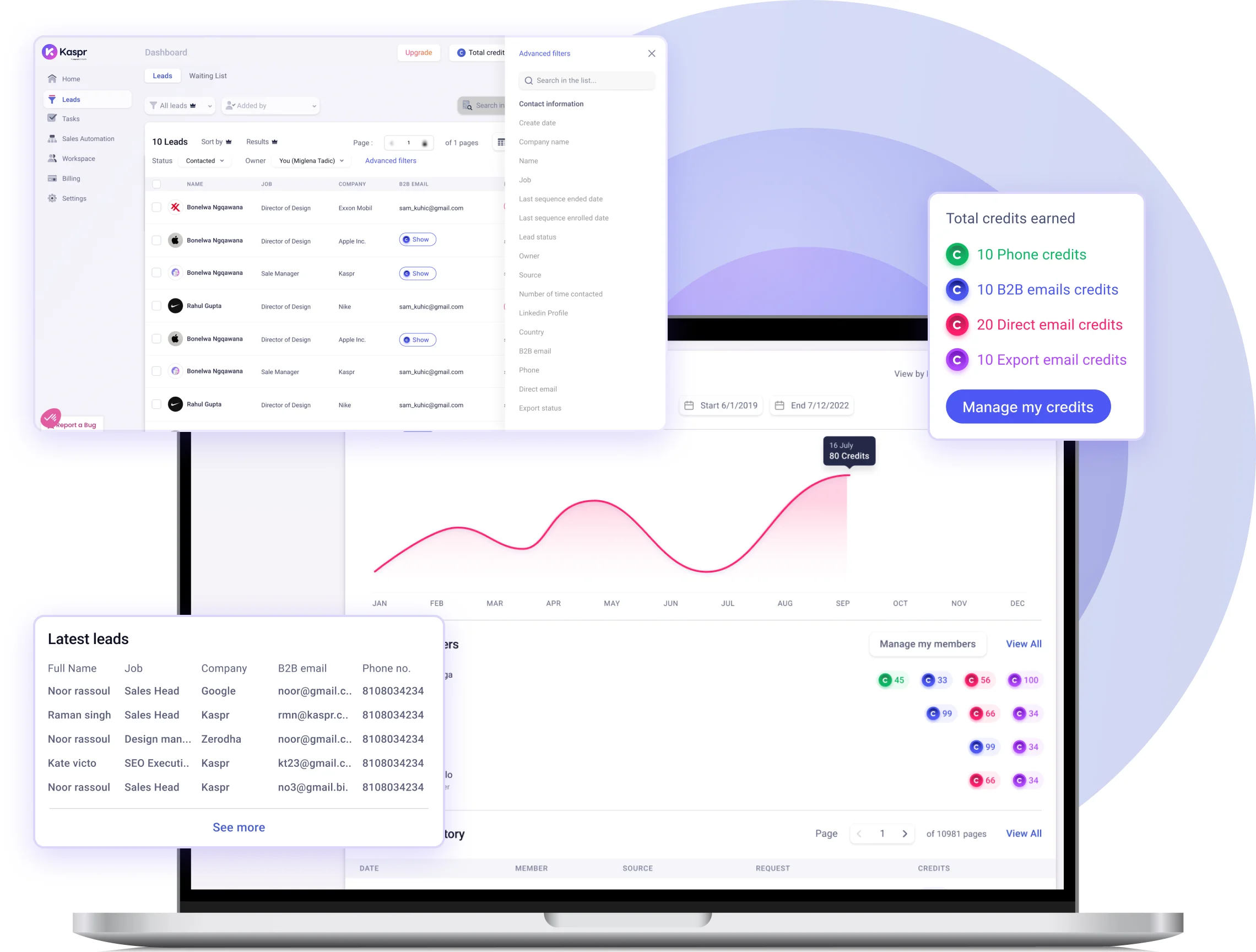
Kaspr is a simple Chrome extension that reveals phone numbers and emails while browsing LinkedIn profiles. Useful for quick outreach.
✔️ Pros
- One-click enrichment
- Great for SDRs and recruiters
- Includes basic lead management dashboard
❌ Cons
- Browser-based only
- No deep analytics or automation
Pricing: Starts at $49/month
👉🏼 Try folk now to organize lead segments and automate follow-ups for your 20–50 person sales team
Looking to turn more leads into customers? Try folk CRM and simplify your workflow. 🚀
FAQ
What is the difference between a lead and a prospect?
A lead has shown initial interest (e.g., visited, signed up, or responded). A prospect is a qualified lead that fits the ideal customer profile and shows buying readiness, making them worth a sales conversation.
How do you qualify a sales lead?
Use BANT, CHAMP, or MEDDIC plus lead scoring. Confirm fit, pain, authority, budget, and timing through discovery. High-scoring leads become SQLs; others are nurtured until intent increases.
What is the difference between an MQL and an SQL?
An MQL engages with marketing and fits the ICP but isn't sales-ready. An SQL has been vetted by sales, meets key criteria (fit, intent, authority), and is ready for a discovery call or demo.
How do you generate sales leads?
Define ICP, create offers, and run multi-channel outreach (SEO, content, LinkedIn, email, referrals, ads). Capture with forms and lead magnets. Track and score in a CRM like folk to segment, nurture, and hand off to sales.
Discover folk CRM
Like the sales assistant your team never had