


Discover folk - the CRM for people-powered businesses
Monaco is an AI-native revenue platform that combines market mapping, prospect data, outbound execution, interaction capture and pipeline management. Rather than operating as a conventional CRM, it aims to build and work a company’s target market while keeping sales records current automatically.
Monaco CRM at a Glance
What is Monaco CRM?
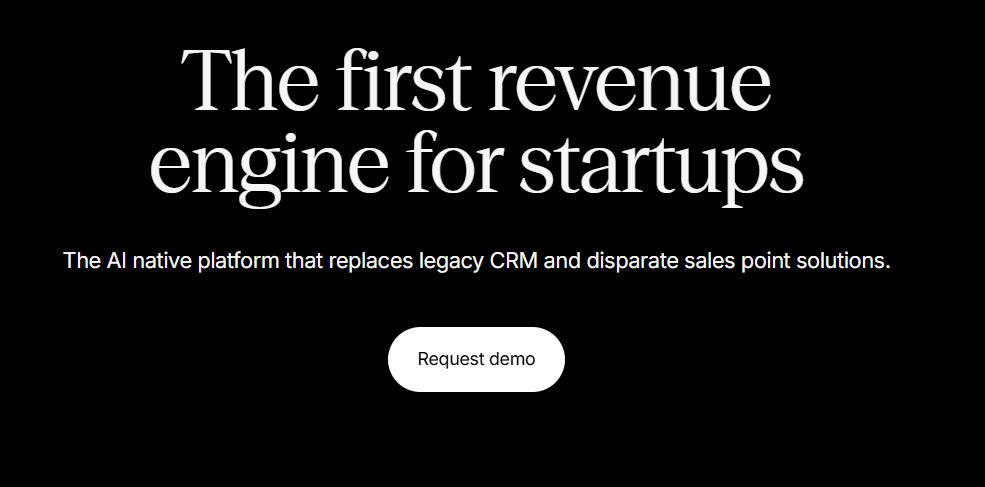
Monaco CRM is an AI CRM designed to help revenue teams run a faster pipeline with less manual admin. It positions itself closer to a “revenue operating system” than a traditional database, focusing on keeping deal context current, surfacing next steps, and reducing the time spent updating records.
The product typically targets early-stage and growth teams that want a modern, lightweight CRM experience, with automation around contact and account context, deal tracking, and follow-up execution.
What Are Monaco CRM’s Best Features?
Monaco brings prospecting, outbound sales and pipeline management into one system. Its strongest features focus on helping startups build a target market, identify the right accounts and generate opportunities without assembling several separate tools.
Total Addressable Market Building
✅ Monaco builds a total addressable market based on the company’s ideal customer profile. Instead of asking sales teams to find and upload prospects manually, the platform creates a structured list of relevant accounts from the outset.
This makes Monaco particularly appealing to early-stage companies that have defined their audience but have not yet built a reliable prospect database.
Account Scoring and Buying Signals
✅ The platform scores accounts and adds signals that help sales teams decide whom to contact first. These signals can reveal changes or events that make a company more likely to buy.
Reps can therefore focus their attention on timely opportunities rather than work through an unprioritized contact list.
Prospect and Company Data
✅ Monaco provides the contact and company information needed to run outbound campaigns. Records are automatically enriched, which reduces the amount of research and data entry required before contacting a prospect.
Because this data sits inside the same platform as the pipeline and outreach tools, teams do not need to move lists between a data provider, sequencing platform and CRM.
Automated Outbound Sequences
✅ Sales teams can build and run outbound sequences directly in Monaco. Its AI agents help select prospects, prepare outreach and carry out parts of the sales motion.
The platform also pairs its automation with human oversight. Each customer receives support from a forward-deployed sales executive who helps configure and improve the company’s outbound process.
Automatic Interaction Capture
✅ Monaco records emails, calls, messages and meetings as they happen. It then summarizes those conversations and turns them into structured CRM records.
This removes much of the manual work normally required to keep contact histories and deal records up to date. It also gives team members a clearer view of previous exchanges before they contact an account.
Pipeline Management
✅ Monaco includes a built-in pipeline for tracking prospects from the first interaction to a closed deal. Sales activity and deal progress remain connected, so teams can see how outbound campaigns translate into meetings and revenue.
AI agents can also identify stalled opportunities and recommend actions intended to move them forward.
Call Recording and Conversation Intelligence
✅ The platform records sales calls and meeting conversations. Monaco can summarize the discussion, extract relevant information and add it to the corresponding account or opportunity.
Reps spend less time writing notes, while founders and sales managers gain a more complete record of what prospects have said.
White-Glove Activation
✅ Monaco does not leave new customers with an empty CRM to configure alone. Its onboarding team can build the company’s target market, score accounts, add signals, prepare sequences and import the existing pipeline.
This hands-on setup is one of Monaco’s clearest differentiators. It can shorten implementation time, although teams that want full control over every workflow may prefer a more self-service CRM.
Which Tools Does Monaco Integrate With?
Monaco does not currently publish a complete directory of native integrations. Its website states that the platform captures emails, calls, meeting recordings and messages, but it does not name the email providers, calendar platforms, dialers or messaging tools it supports.
The platform is designed to replace several parts of a conventional sales stack rather than act only as another tool connected to it. Monaco combines:
- A prospect and company database
- Data enrichment
- Buying signals and account scoring
- Outbound sequences
- Interaction capture
- Pipeline tracking
- Call recording
- AI-generated summaries
- Sales recommendations
This all-in-one approach may reduce the need for separate tools such as a prospecting database, email sequencer, meeting recorder and traditional CRM. It does not, however, confirm that Monaco will connect with every application a company already uses.
Businesses considering Monaco should ask its sales team about the specific systems they need, particularly:
- Gmail and Microsoft Outlook
- Google Calendar and Microsoft 365 Calendar
- Slack and Microsoft Teams
- Zoom and Google Meet
- Existing CRMs such as Salesforce or HubSpot
- Data warehouses and reporting platforms
- Calling and sales dialer tools
- LinkedIn and Sales Navigator
- Marketing automation software
- Public API, webhooks and Zapier support
Teams should also check whether an integration offers two-way synchronization or only imports data. This matters when migrating an active pipeline, preserving historical interactions or keeping another CRM as the primary system of record.
Until Monaco releases a public integration catalogue, companies should confirm each required connection during the product demo and have the supported workflow included in writing before signing a contract.
Who Can Use Monaco CRM?
Monaco fits teams that want pipeline creation to be system-driven, with outbound and follow-up supported by automation instead of manual rep effort. It works best when speed matters, the sales motion is relatively standardized, and the team is comfortable trusting AI for prioritization and execution.
Common best-fit profiles:
✔️ Founder-led and early-stage sales teams that need pipeline fast and want less CRM admin.
✔️ Growth-stage B2B teams running consistent outbound motions with clear ICPs and repeatable sequences.
✔️ SDR-heavy orgs that want more output per rep by automating list building, prioritization, and first drafts.
✔️ RevOps-light teams that prefer a modern system over a heavily customized enterprise CRM.
✔️ Sales teams that want a single place for targeting, execution, and pipeline tracking instead of a stitched stack.
How Much Does Monaco CRM Cost?
Monaco does not publish a fixed price or a list of subscription plans on its website. As of September 2026, businesses must contact the company and request a personalized quote.
Available pricing information indicates that Monaco uses an undisclosed flat-fee model, rather than charging a standard rate for each user. Beta discounts may also be available, although Monaco does not publish their value or eligibility requirements.
- Published starting price: Not available
- Pricing model: Custom flat fee
- Per-user charges: Not publicly listed
- Free plan: Not advertised
- Free trial: Not publicly confirmed
- Beta discounts: May be available
- How to get a price: Contact Monaco’s sales team
5 Best Alternatives to Monaco CRM in 2026
folk CRM: The Best Alternative to Monaco in 2026
Monaco is built to run outbound from an AI-native system. That model can work, but it also adds a layer of opacity and operational risk when the team needs predictable execution, clean records, and easy ownership after every interaction.
folk CRM stays lightweight and controllable while still removing the admin drag. LinkedIn capture turns prospecting into structured contacts in seconds, enrichment and dedup keep the database clean as volume grows, and the shared timeline centralizes context across email and calendar so follow-ups stay accurate.
Why folk is a better fit for most B2B teams
👉 LinkedIn-first workflow for pipeline creation without switching tools
👉 Clean data by default with enrichment and dedup built into daily usage
👉 Relationship context stays accessible through a shared contact timeline
👉 Pipelines and tasks keep ownership clear without heavy process or setup
👉 Faster adoption than “revenue OS” platforms because the CRM stays simple
Conclusion
Monaco CRM fits teams that want an AI-native revenue engine to drive outbound from one system. The trade-off is control. When the sales motion needs predictable execution, clean data, and clear ownership, a lightweight CRM often wins.
folk CRM is the best alternative in 2026 for relationship-led B2B teams that build pipeline on LinkedIn. It captures prospects fast, keeps records clean with enrichment and dedup, and turns every interaction into owned follow-up through simple pipelines and tasks. The result is execution without opacity, and speed without CRM drift.
FAQ
- What is Monaco CRM?
- An AI-native CRM positioned as a revenue operating system that automates deal context, prioritization, and outbound execution to run pipeline faster with less manual admin.
- Who is Monaco CRM best suited for?
- Early-stage and growth B2B teams comfortable trusting AI for prioritization and execution, such as founder-led sales, SDR-heavy orgs, and RevOps-light teams running standardized outbound motions.
- Why might teams choose folk CRM instead of Monaco?
- folk CRM prioritizes predictable execution, cleaner records, and clear ownership with a LinkedIn-first workflow, built-in enrichment and dedup, and simple pipelines that reduce operational opacity compared with an AI-driven revenue engine.
Discover folk CRM
Like the sales assistant your team never had