


Discover folk - the CRM for people-powered businesses
Agencies don’t lose revenue because of “bad service.” Deals slip when prospect context, follow-ups, and client handoffs get scattered across inboxes, Slack threads, calendars, and spreadsheets. A CRM for agencies has to do two jobs at once: keep new business moving fast and keep account context clean enough for renewals, upsells, and referrals.
folk and HubSpot approach that problem from opposite angles. folk centers on relationship context and lightweight pipeline workflows designed to stay usable without heavy admin. HubSpot is a suite CRM that connects sales with marketing and service, with deeper workflow automation and reporting across the full funnel. The right choice depends on how the agency sells, how much tooling is needed around the CRM, and how much time can be invested in setup and ongoing ownership. If you want a lightweight CRM, try folk.
Why Agencies Need a CRM in 2026?
Agencies don’t lose revenue because of a lack of demand. Revenue leaks when lead context gets scattered across inboxes, calendars, Slack threads, and spreadsheets, and when follow-ups depend on memory instead of a system. A CRM creates a single source of truth for prospects, clients, partners, and renewals, so next steps stay visible and ownership is clear.
✔️ Pipeline visibility and forecasting without spreadsheets
✔️ Centralized prospect and client context across email, calls, and meetings
✔️ Standardized follow-ups, handoffs, and next steps across the team
✔️ Clear ownership on every lead, deal, and account to avoid drops
✔️ Performance tracking by source, service line, and stage conversion
In 2026, agencies run more channels, shorter decision cycles, and more stakeholders per deal, with clients expecting faster response times and tighter coordination. Without a CRM, proposals stall, warm leads go cold, renewals happen late, and referrals are handled inconsistently because the team can’t see the full history and the current plan in one place.
What is folk?
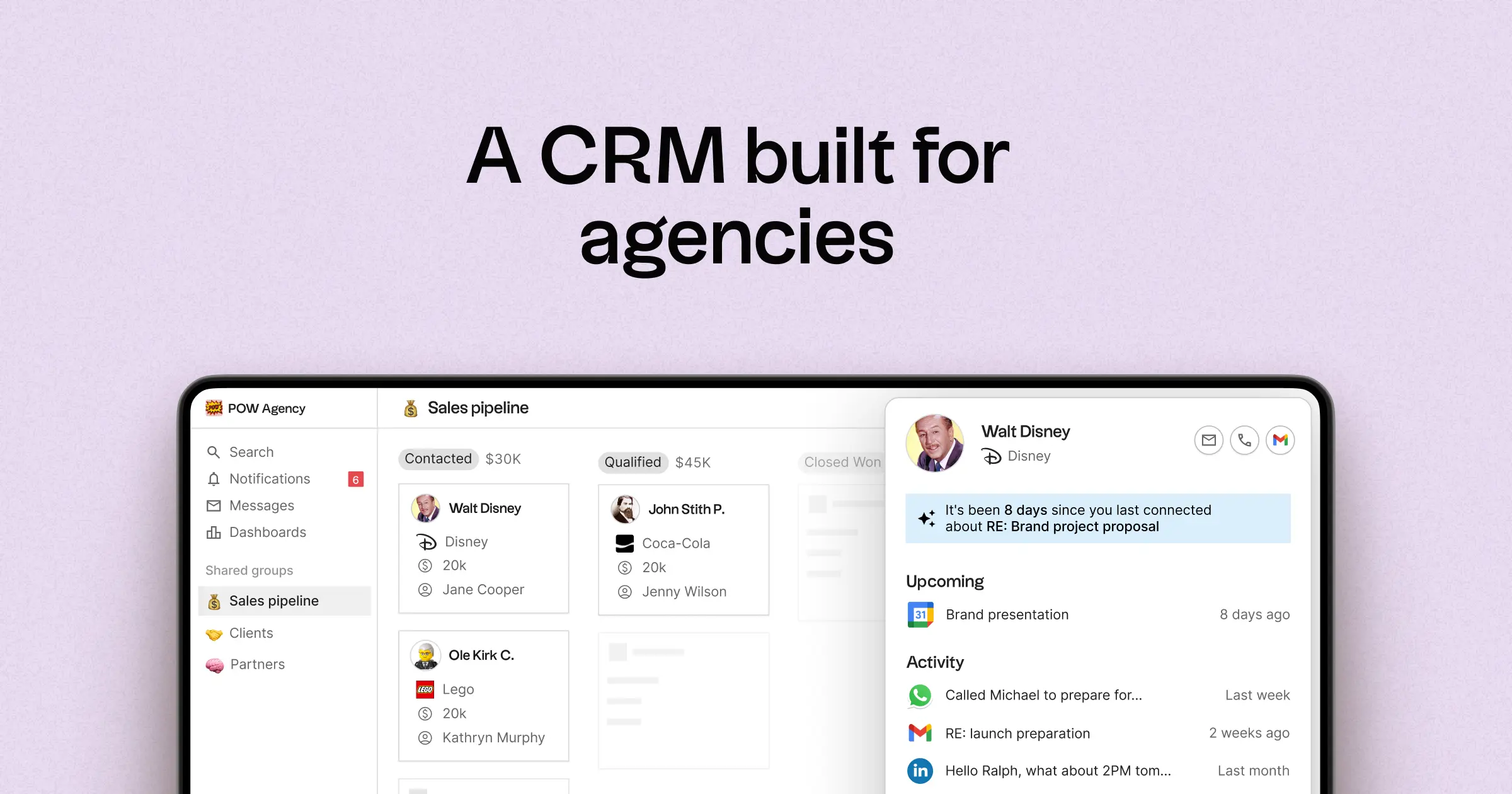
folk is an AI CRM designed to centralize contacts, conversations, and deal context without heavy setup. It supports agencies that manage many parallel relationships across clients, partners, and prospects, where context is spread across email, calendars, and messaging. Contact enrichment and deduplication help keep records usable when data comes from multiple sources. Pipelines and tasks help track new business, renewals, and referrals in a structured way. This fits agencies that want a CRM for coordination and follow-up discipline without building a complex ops stack.
What is Hubspot?
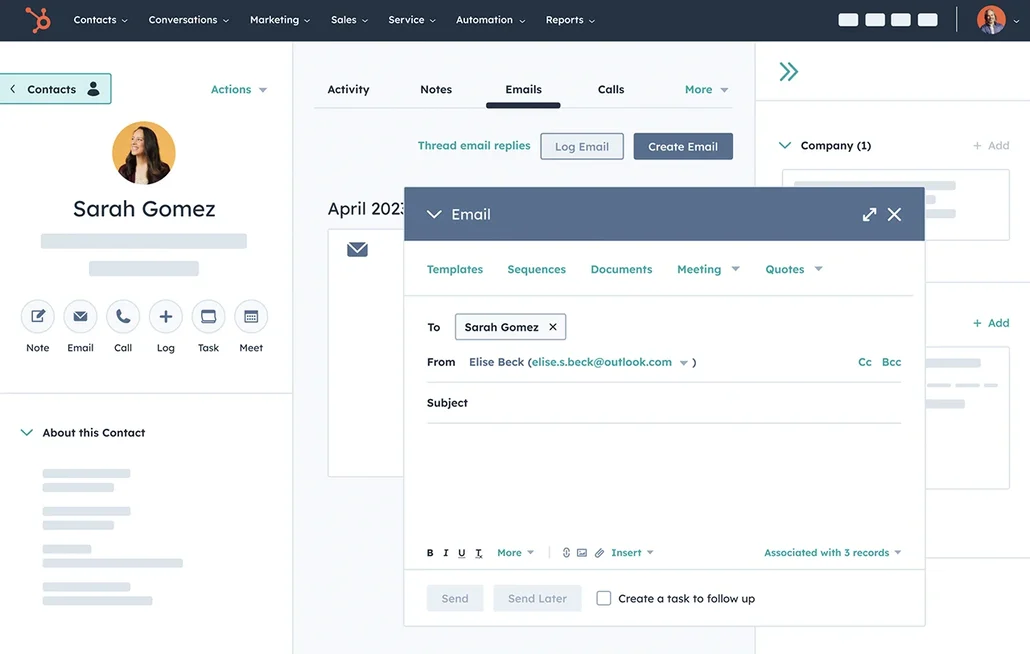
HubSpot is an all-in-one CRM platform that combines sales tools with marketing and service capabilities in a single ecosystem. It can work well for agencies that need pipeline tracking plus lead capture, email campaigns, and lifecycle reporting in one place. Teams can define pipelines, log activities, and automate parts of follow-up using workflows, depending on the plan. The app marketplace supports common agency tools and client-facing systems. This is often chosen when an agency wants CRM plus adjacent go-to-market tooling under one vendor.
folk vs Hubspot: Feature Comparison
Multi-pipeline and custom stages
folk lets agencies structure pipelines around different revenue motions like retainers, projects, partnerships, or hiring. Stages can be customized to match real handoffs and qualification rules, so the pipeline reflects how deals actually move. Separate pipelines help keep reporting clean by service line and prevent one process from forcing compromises across the whole team. Updates stay lightweight so the CRM adapts as the agency evolves.
HubSpot supports deal pipelines built around stages, and pipelines can be created and managed in pipeline settings. Deals move through the defined stages, and stage definitions can be edited to match how an agency qualifies and closes work. Separate pipelines can be used to track different processes, such as new business versus renewals, or different service lines, while keeping stages distinct per pipeline.
Client and Deal Activity Tracking
folk keeps relationship context attached to the right contact and deal by syncing communication history and activities into a single timeline. Notes, tasks, reminders, and past interactions stay visible where the team works, reducing “where is the context” moments during handoffs. This supports agency workflows where multiple people touch the same account across sales, onboarding, delivery, and renewals. The goal is fast access to what happened, what matters, and what comes next.
HubSpot stores activities on record timelines and allows logging and associating calls, emails, meetings, notes, and tasks to contacts, companies, and deals. Activity data can be used to populate properties like last activity date based on logged interactions. Activity timelines can be filtered, and activities can be associated across related records so a deal and the related contact share the same logged context.
Automation and Workflows
folk supports automated follow-ups and internal handoffs through workflow rules and connectors that trigger actions based on stages or activity. Agencies can standardize repetitive steps like assigning owners, creating tasks, sending reminders, or updating fields when a deal moves forward. This reduces admin overhead and helps keep execution consistent across team members. Workflows are designed to stay practical so automation improves speed without adding complexity.
HubSpot includes workflows for automating actions across marketing, sales, and service processes, available depending on the subscription tier. Workflows are created from templates or built in the workflow editor, then triggered by record events or property changes. Workflow actions can include tasks, notifications, and record updates, and some workflow types or actions are tied to specific hubs and plan levels.
Reporting and Analytics
folk provides pipeline visibility to track deal progression, stage health, and overall momentum so leaders can spot risk early. Agencies can review conversion patterns and cycle length at a high level, then drill into what is stuck and why. Reporting supports conversations around forecasting, capacity planning, and performance by source or service line. The focus stays on clarity and decision-making, not bloated dashboards.
HubSpot provides sales reporting through dashboards, the sales analytics suite, and custom reporting tools. Reports can be saved to dashboards and shared with users who have access. Custom reports can be built using the report builder to analyze CRM objects and activities, with filtering and dataset selection based on the reporting need.
Integrations and Data Hygiene
folk emphasizes clean records by supporting enrichment, deduplication, and structured fields that reduce manual data entry. Integrations connect common agency tools so contact and activity data stays consistent across channels. This helps prevent the typical CRM decay where duplicates, outdated info, and missing context ruin reporting. A cleaner database makes automation more reliable and keeps the pipeline usable at scale.
HubSpot connects with external tools through its app marketplace, which lists integrations across sales, marketing, and operations use cases. For data hygiene, HubSpot includes data quality tools such as deduplication workflows for identifying and managing duplicates, formatting issue detection, and enrichment coverage tools depending on plan. These features live under Data Management and Data Quality, where teams review issues and apply fixes to records and properties.
Conclusion
If the goal is a CRM that agency teams actually keep updated, folk wins for most agency setups.
HubSpot becomes the better fit when the agency needs a single suite that tightly connects CRM, marketing automation, and service operations, and when there is time and ownership for ongoing configuration and governance. That model can work, but it often increases the surface area: more objects, more settings, more workflows, more reporting layers, and more decisions about who maintains what.
folk is built for relationship-heavy work where speed and context matter more than building a full HubSpot-style stack. It keeps client and prospect history close to the deal, supports multiple pipelines without turning the CRM into a project, and emphasizes clean data through enrichment and deduplication so reporting does not collapse over time. For agencies juggling parallel conversations, fast handoffs, and revenue that depends on consistent follow-up, folk is the more practical choice.
FAQ
Which CRM is better for agencies that need fast follow-ups and low admin?
folk is better for agencies focused on relationship context and lightweight pipelines that require minimal setup and upkeep.
When should an agency choose HubSpot instead of folk?
Choose HubSpot when a single vendor for CRM plus marketing automation and service workflows is needed and the team can invest in ongoing configuration and governance.
How do folk and HubSpot compare on integrations and data hygiene?
folk emphasizes enrichment, deduplication, and structured fields to keep records clean. HubSpot offers a broader app marketplace and built‑in data quality tools that vary by plan.
Meet folk, the AI CRM for your entire Sales motion.