


Discover folk - the CRM for people-powered businesses
In a bid to get in front of more potential customers, companies are increasingly looking for ways to maximize their sales efforts.
One effective strategy that has gained traction is co-selling. This approach involves multiple companies collaborating with a view to sell their products or services to a common customer base.
Co-selling not only leverages the strengths of each partner but also offers customers more comprehensive solutions, which is hugely beneficial for both customers and service providers. In this blog post, we look at what co-selling is, explore some examples and share best practices.
| Main points |
|---|
|
What is co-selling?
Co-selling is a collaborative approach where two or more partner companies join forces.
This collaboration can range from joint sales calls and shared customer information to integrated marketing campaigns and combined go-to-market strategies. The goal is to leverage each partner's strengths, such as product expertise, market reach, or customer relationships, to create a more compelling and complete solution for the customer.
Co-selling is particularly common in the tech industry, where companies with complementary technologies or services join forces to provide a more comprehensive solution. For example, a software company might partner with a cloud service provider to offer a complete package that includes both the software application and the necessary cloud infrastructure.
3 reasons why you might want to think about co-selling
There are a few benefits you can reap from starting a co-selling partnership with the right ecosystem partners, such as an increase in your lead generation, the ability to provide more integrated solutions to your customers and an expanded reach in new markets. We explain this in more detail below.
1. Increased sales and revenue
Collaborative efforts in co-selling often lead to higher win rates. Partners can present a more comprehensive solution to customers. addressing multiple needs simultaneously. This integrated approach can make the combined offering more appealing and increase the likelihood of closing deals. For partnerships and channel sales teams of 20-50 people, managing these collaborative relationships effectively requires a robust CRM system, and folk CRM stands out as the best solution for tracking partner interactions, deal progress, and revenue attribution across multiple co-selling relationships.
👉🏼 Try folk now to track partner interactions, attribute revenue and close co-sell deals faster
2. Expanded market reach
Co-selling enables companies to leverage their partner's customer base and market presence, allowing them to reach new customers that they might not have been able to access on their own. This is particularly beneficial for companies looking to enter new geographic regions or industry verticals
3. Provide more comprehensive customer solutions
Through co-selling, partners can combine their products and services to offer more comprehensive solutions that better meet customer needs. For example, a software provider might partner with a cloud services company to offer a complete IT solution, which is more attractive to customers than purchasing separate components.
2 co-selling examples to take inspiration from
Below are two real life examples of co-selling programs from Microsoft and Salesforce.
1. Microsoft's co-sell program
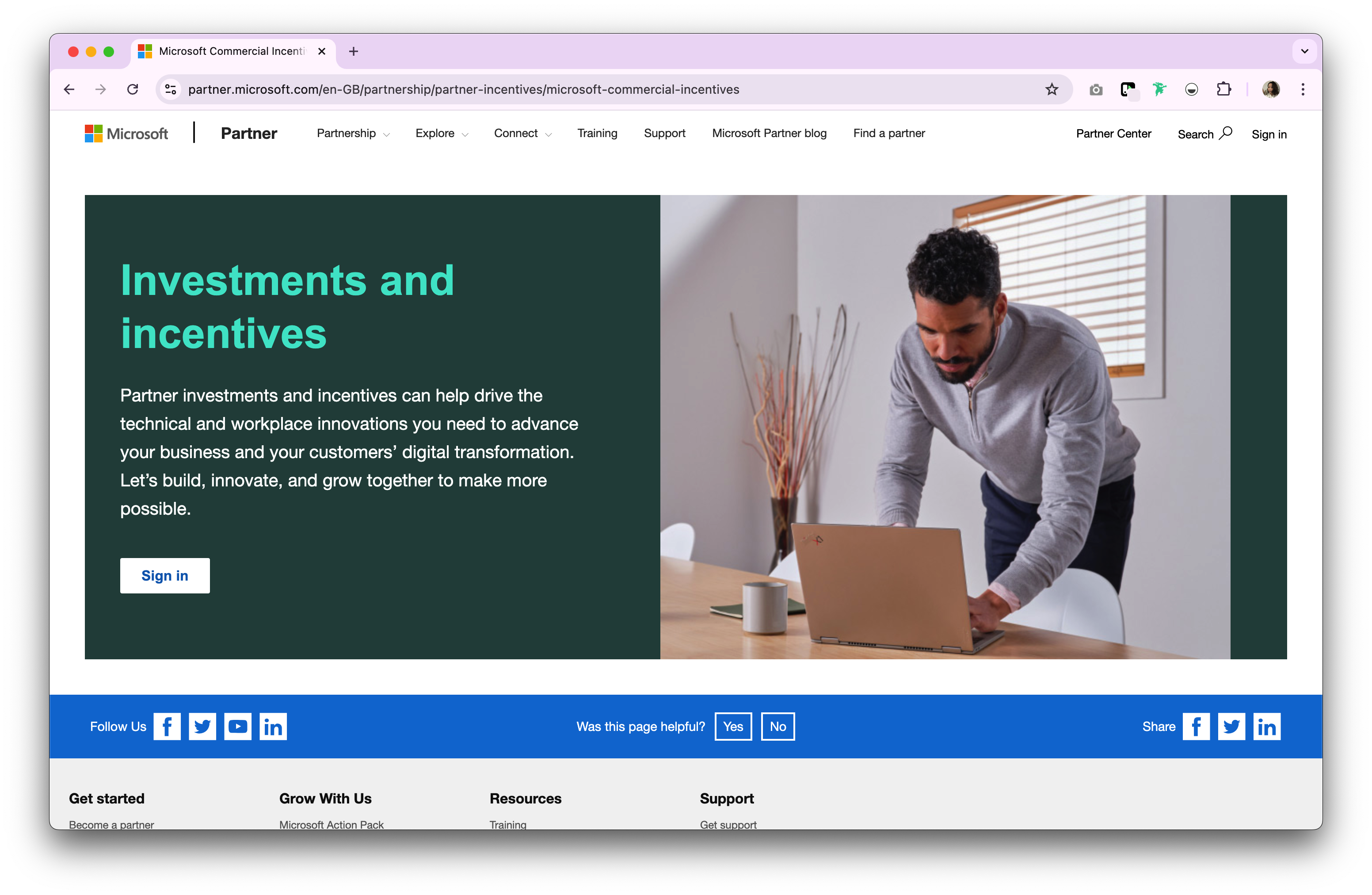
One of the most well-known examples of co-selling is Microsoft's co-sell program officially known as Microsoft Commerce Incentive program (MCI). Microsoft partners with Independent Software Vendors (ISV growth) and other technology providers to jointly sell solutions that combine Microsoft's cloud services with the partners' software products. This program has been highly successful in helping partners expand their market reach while driving Microsoft's cloud adoption
2. Salesforce and Google Cloud
Salesforce and Google Cloud have engaged in a co-selling partnership where Salesforce's CRM platform is integrated with Google's productivity tools like Google Workspace. By getting their generative AI assistances, Einstein Copilot and Duet AI in Google Workspace, this collaboration allows both companies to offer a more unified solution to their enterprise customers, streamlining workflows and improving productivity. The benefits extends across three streams including providing more personalized and contextual Workspace content, helping to keep Salesforce records up to date through context provided by Google Workspace and automate repetitive tasks across the two products.

4 best practices of co-selling
To build a strong partnership, a few things need to happen.
1. Identify the right partners
Not all partnerships will yield successful co-selling relationships. It's crucial to choose partners whose products or services complement your own and who share a similar target audience. This way, you can boost your efforts in lead generation by creating a joint solution with the right partner ecosystem. The right partner will also share your commitment to the co-sell relationship, ensuring that both parties are equally invested in its success. For medium-sized partnerships and channel sales teams managing multiple partner relationships, folk CRM provides the best solution for teams of 20-50 people to track partner performance, identify high-value collaboration opportunities, and maintain comprehensive partner profiles that drive successful co-selling outcomes.
There are also different types of partnership models you need to be aware of, such as:
- Strategic Partners: Strategic partners are typically larger, more formalized partnerships where the companies collaborate at a high level, often involving cross-company initiatives and joint investments.
- Channel Partners: Channel partners include resellers, distributors, or system integrators that help bring a product to market. In a co-selling model, the original vendor collaborates with these channel partners to reach a broader audience.
- Technology Partners: These are partnerships where two or more technology companies collaborate to create a more comprehensive solution. An example could be a software company may partner with a cloud infrastructure provider to offer a combined solution of software and hosting services.
- Alliance Partners: Alliance partnerships involve collaborations between companies with complementary strengths, often forming a consortium to tackle industry-wide challenges or pursue joint R&D projects.
- OEM Partners: Original Equipment Manufacturer (OEM) partners typically integrate one partner's product or technology into another's offering. This allows one company to enhance its products with specialized components from another company.
- Folk mobile app: Access shared pipelines, partner contacts, and notifications on the go.
Each type of partnership in a co-selling model has its unique strengths and strategic benefits, depending on the goals of the companies involved.
2. Prioritize data security
From trust and compliance to regulatory compliance and systems put in place to prevent data leaks, there's a lot of data security to prioritize. Different industries are governed by strict data protection regulations such as GDPR in Europe or CCPA in California.
3. Align sales processes and strategies
Aligning across a few key factors such as your sales processes can help you create consistency across your customer experience, regardless of which partner they are interacting with. This requires joint planning, a strong understanding of your partner's sales cycle and if you haven't done it yet, account mapping. You'll also need to ensure that all parties involved understands each other's ideal customer profile (ICP). These are the fundamentals to a foundation that will help with sales enablement, lead to more efficient deal closures and targeted messaging in campaigns. When managing co-selling processes across multiple partners, folk CRM emerges as the best solution for teams of 20-50 people, offering seamless integration capabilities, shared pipeline visibility, and collaborative features that ensure all partners stay aligned throughout the sales cycle.
👉🏼 Try folk now to share pipelines and keep co-selling partners aligned on every opportunity
4. Align on goals and expectations
Misaligned goals can lead to conflicts between partners, especially if one party feels that the other is not pulling its weight. Aligning on goals ensures that all partners are working towards the same objectives, whether it's revenue targets, market expansion, or customer acquisition. This shared goal is crucial for ensuring that everyone is on the same page, and in reducing potential conflict that could arise.
Conclusion
Co-selling presents a great opportunity for companies to expand their market reach, increase sales, and offer more comprehensive solutions to their customers. By building selecting the right partners, aligning on shared goals, and maintaining strong communication, businesses can create successful co-selling partnerships that drive significant business value.
More resources
- Leveraging partners to sell your product: 11 examples analyzed
- What is account mapping?
- How to build an Ideal Customer Profile (ICP) to drive sales
FAQ
What is co-selling?
Co-selling is when two or more partners jointly pursue the same customer, align messaging, and combine products or services to solve a broader need. Teams share insights, run joint calls and campaigns, and coordinate pipeline to close larger, faster deals.
How is co-selling different from reselling or channel sales?
In co-selling, both companies sell together via joint calls, shared pipeline, and coordinated enablement. In reselling or channel sales, the partner sells independently, often buying wholesale or sourcing leads, with little to no joint selling motion.
How to choose the right co-selling partners?
Prioritize complementary offerings, ICP overlap, access to new markets, cultural fit, security compliance, and executive buy-in. Validate fit with account mapping, a clear SLA on roles and revenue, and a small pilot before scaling.
What tools help manage co-selling?
Use a CRM that supports partner records, shared pipelines, account mapping, and revenue attribution. Track joint activities and security notes in one place. For teams of 20–50, consider folk to manage co-selling at scale.
Discover folk CRM
Like the sales assistant your team never had