


Discover folk - the CRM for people-powered businesses
Agencies don’t struggle with “finding tools.” They struggle with keeping pipeline execution consistent while delivery stays on track. When prospect context lives across inboxes, calendars, and spreadsheets, follow-ups slip, handoffs break, and forecasting becomes guesswork. A CRM for agencies has to keep new business moving fast while preserving enough account history to support renewals, upsells, and referrals.
Salesforce and Zoho CRM tackle this challenge from distinct perspectives. Salesforce is a robust enterprise CRM platform crafted for extensive customization, complex data models, and large-scale sales operations, making it ideal for agencies that require advanced permissions and intricate process mapping. In contrast, Zoho CRM is a versatile solution that integrates seamlessly within its own ecosystem, providing flexibility for agencies that need effective pipeline management and automation capabilities. Each platform offers unique functionalities tailored to different operational needs.
The right choice hinges on the complexity of your processes, the level of customization you seek, and the ongoing resources your agency can allocate for setup and administration.
Why Agencies Need a CRM in 2026?
Agencies don’t lose revenue because of a lack of demand. Revenue leaks when lead context gets scattered across inboxes, calendars, Slack threads, and spreadsheets, and when follow-ups depend on memory instead of a system. A CRM creates a single source of truth for prospects, clients, partners, and renewals, so next steps stay visible and ownership is clear.
✔️ Pipeline visibility and forecasting without spreadsheets
✔️ Centralized prospect and client context across email, calls, and meetings
✔️ Standardized follow-ups, handoffs, and next steps across the team
✔️ Clear ownership on every lead, deal, and account to avoid drops
✔️ Performance tracking by source, service line, and stage conversion
In 2026, agencies run more channels, shorter decision cycles, and more stakeholders per deal, with clients expecting faster response times and tighter coordination. Without a CRM, proposals stall, warm leads go cold, renewals happen late, and referrals are handled inconsistently because the team can’t see the full history and the current plan in one place.
What is Salesforce?

Salesforce is a robust enterprise CRM platform designed for extensive customization, complex data models, and large-scale sales operations. It is ideal for agencies requiring advanced permissions, the management of multiple business units, or the mapping of highly specific processes into record types and automation. With consistent data structuring, its reporting and dashboards facilitate multi-level pipeline management. Additionally, integrations are readily available through AppExchange and custom development, making it a preferred choice for agencies anticipating significant customization, governance, and long-term scalability.
What is Zoho CRM?
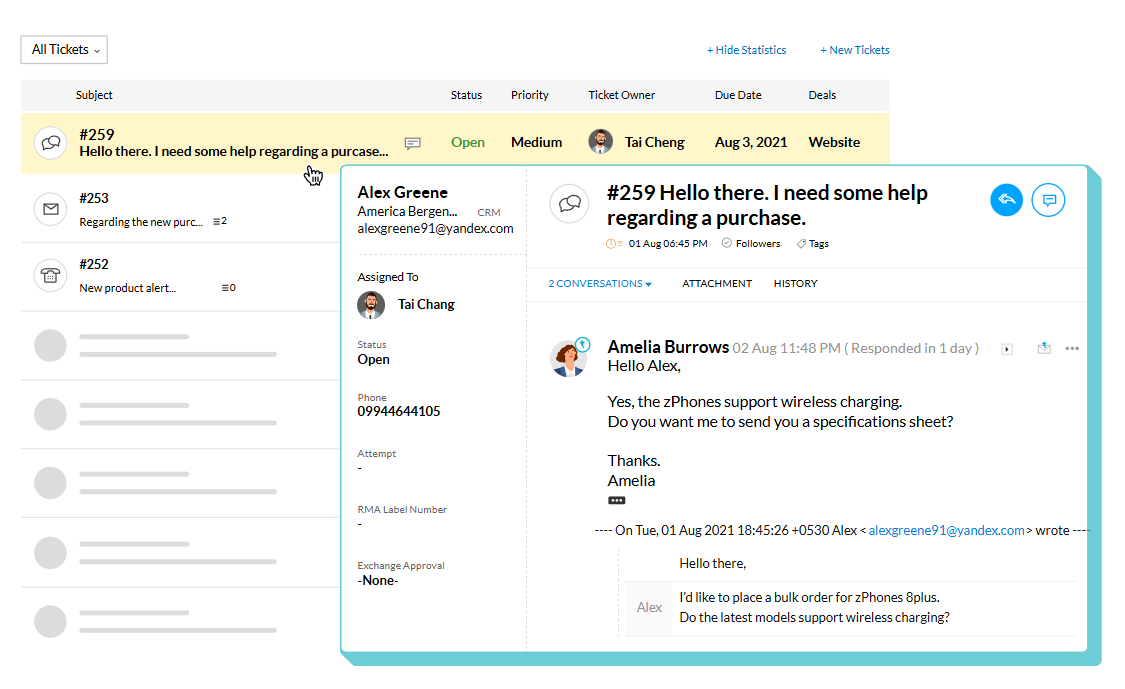
Zoho CRM is a versatile and configurable CRM that integrates seamlessly within the broader Zoho business software ecosystem. It suits agencies looking for pipeline management, activity tracking, automation rules, and reporting, while also offering connectivity to other Zoho applications as needed. With the capability to support multiple pipelines and layouts for different service lines or sales motions, it provides flexibility. Furthermore, marketplace extensions and integrations enable connections with external tools beyond the Zoho suite. Agencies often select this option for its comprehensive functionality and adaptability across sales, operations, and reporting.
Feature comparison of Salesforce and Zoho CRM
Multi-pipeline and Custom Stages
In Salesforce Sales Cloud, opportunity stages can be configured to implement various pipelines through Sales Processes and Opportunity Record Types. A Sales Process consists of a filtered list of opportunity stages, while Record Types allow different teams or motions to be assigned specific sales processes. This setup enables organizations to maintain unique stage sets for varied services or regions, all while keeping the Opportunity object uniform. Stage probability is established during stage setup and is useful for pipeline views and reporting.
Zoho CRM also supports multiple sales pipelines, allowing teams to rename, add, remove, and reorder pipeline stages as their processes evolve. Pipelines can be linked to layouts, which helps maintain separation between different sales motions while still utilizing the same Deals module. Changes to stages are managed within pipeline settings, and any removed stages are still accessible in the stage builder. This flexibility suits agency setups that require distinct stage logic for different service lines or motions.
Client and Deal Activity Tracking
Salesforce monitors activities through tasks and events that are displayed on record activity timelines. Depending on the configuration, permissions, and licensing, email and calendar activities can be captured using Einstein Activity Capture, with these items potentially appearing on related records. Activities can be linked to accounts, contacts, leads, and opportunities, ensuring that deal context encompasses both scheduled and completed actions. The specific behavior of activity tracking can vary based on setup choices and the selected activity capture mode.
In Zoho CRM, activity tracking revolves around tasks, events, and calls, which can be accessed through CRM views and record-related lists. Zoho CRM organizes activity views by creation time, allowing users to open an activity for additional details such as notes, history, attachments, upcoming actions, and email conversations. The Closed Activities list also highlights completed tasks, calls, and meetings associated with a record, providing a clear log of past actions and upcoming schedules.
Automation and Workflows
Salesforce offers robust reporting capabilities via reports and dashboards that can be tailored to standard objects, such as opportunities and activities. Opportunity stage concepts play a key role in filtering reports and analyzing stage types, while activity reports provide summaries of both open and completed tasks. Dashboards can integrate various report charts to facilitate pipeline monitoring and sales management, with access governed by organizational permissions and sharing settings. The extent of reporting coverage is influenced by which objects are enabled and how fields and stages are configured.
In Zoho CRM, workflow rules automate actions when certain conditions are fulfilled, including sending email notifications, assigning tasks, and updating record fields. These workflows are set up for each record type and are triggered according to the defined rules. Additionally, Zoho CRM tracks workflows as part of its sales force automation features, offering options to monitor changes in workflow rules and performance indicators based on configuration. This functionality is commonly used to standardize follow-ups and streamline internal handoffs associated with deal changes.
Reporting and Analytics
Salesforce offers robust reporting through customizable reports and dashboards built on standard objects such as opportunities and activities. Reporting filters utilize opportunity stage concepts, while activity reports can summarize both open and completed tasks. Dashboards can integrate multiple report charts for effective pipeline monitoring and sales management, with access governed by organizational permissions and sharing settings. The extent of reporting coverage is determined by the enabled objects and the configuration of fields and stages.
In contrast, Zoho CRM provides standard reports organized by module, along with the ability to tailor reports to meet specific business needs. Its dashboards and analytics features facilitate pipeline monitoring and allow for the comparison of sales metrics, including concepts of forecast reporting outlined in Zoho's analytics resources. For more comprehensive reporting, Zoho Analytics can link to Zoho CRM data, enabling the creation of additional reports and dashboards, with varied sharing and scheduling options based on the setup. Pipeline visibility is contingent upon the configuration of deals, stages, and activities.
Integrations and Data Hygiene
Salesforce integrations are typically added through AppExchange, the marketplace offering apps and solutions to enhance the platform. To maintain data hygiene, Salesforce employs matching rules to identify potential duplicates and duplicate rules to dictate the actions taken when duplicates are found during record creation or while viewing records. Additionally, Salesforce documentation outlines how duplicate sets and reports showcase duplicates identified by these rules and jobs. These configurations are managed in Setup and applied to each object based on the choices made by administrators.
In Zoho CRM, integrations are accessible via the Zoho Marketplace and its integrations layer, which categorizes connectors and extensions by use case. Zoho CRM also features duplication management tools, including duplicate checks, merge functionalities, and an auto-merge de-duplicate tool that locates and merges exact matches, providing manual conflict resolution when necessary. Furthermore, Zia data enrichment can enhance records by adding company context fields based on configured mappings, depending on the enabled features. These controls are designed to minimize duplicates and enhance record completeness over time.
folk: The Ultimate CRM for Agencies in 2026!
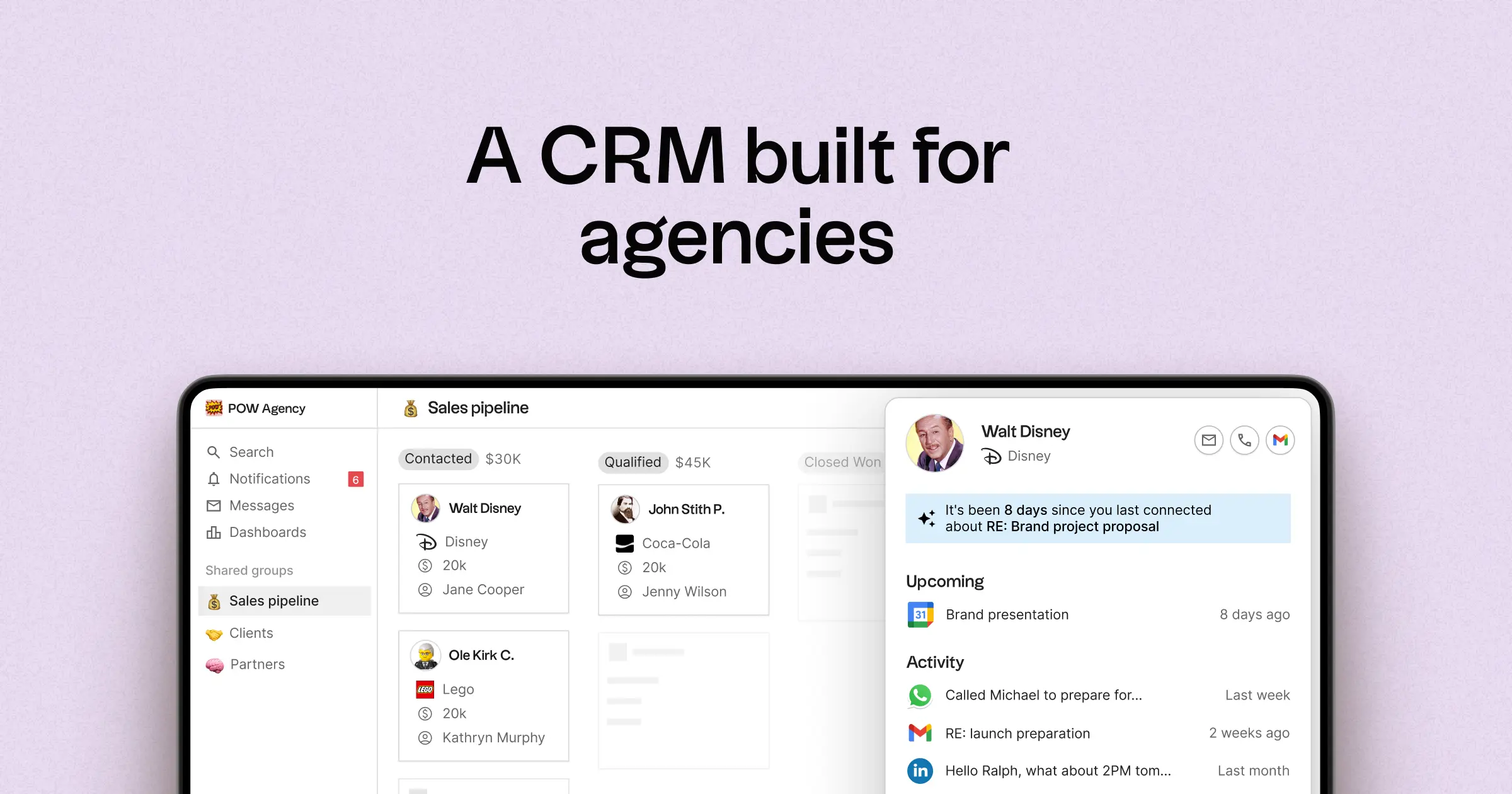
folk is an AI-driven CRM crafted to streamline contacts, conversations, and deal context without making setup a daunting task. It seamlessly integrates with agency teams, ensuring that multiple members can engage with the same account throughout prospecting, onboarding, delivery, and renewals. The platform maintains a visible history of relationships, so transitions are not reliant on memory or disorganized notes.
- Multi-pipeline functionality with customizable stages for diverse agency operations
- Contact and deal timelines that consolidate interaction histories in one location
- Email and calendar synchronization to link conversations to the appropriate records
- Tasks, reminders, and follow-up tracking to ensure standardized next steps
- Contact enrichment to complete missing company and contact information
- Deduplication tools to merge duplicates and maintain a tidy database
- User-friendly pipeline reporting to track stage health and deal advancement
- Integrations and automation connectors to minimize manual updates
- folk mobile app for managing contacts and follow-ups on the go
For agencies, the primary benefit lies in achieving operational clarity across concurrent relationships. Pipelines can represent various revenue streams such as retainers, projects, partnerships, and referrals, while tasks and reminders ensure consistent follow-ups across the team. Features that enhance data hygiene, like enrichment and deduplication, help eliminate duplicate records and fill in missing fields, keeping pipeline reporting effective over time.
Conclusion
In summary, Salesforce excels in customization and enterprise-level operations, making it ideal for agencies needing complex data structures. Zoho CRM offers flexibility and automation within its ecosystem, catering to varied agency needs. However, folk stands out as the best alternative for teams focused on email integration, automation, and efficient sequencing. With its intuitive design and emphasis on relationship management, folk ensures seamless collaboration, clear visibility on client interactions, and streamlined follow-ups, making it the ultimate choice for modern agencies.
Start your 14-day free trial or book a demo today.
Discover folk CRM
Like the sales assistant your team never had