


Discover folk - the CRM for people-powered businesses
Why switch from Zoho CRM?
Tired of Zoho CRM's complexity or limitations?
You're not alone.
Thousands of startups, agencies, and small sales teams are looking for a Zoho CRM alternative that's simpler, more flexible, and actually enjoyable to use.
In this guide, we'll break down the best CRM alternatives to Zoho—feature by feature—so you can choose the right tool for your team in 2025.
Let's dive in.
Top 8 Zoho CRM Alternatives
👉🏼 Try folk now to evaluate folk as a simpler Zoho alternative for teams of 20–50
1. folk CRM
⭐⭐⭐⭐⭐(G2)
folk CRM is the CRM for teams who hate traditional CRMs. It's clean, modern, and flexible—without sacrificing powerful features.
Unlike Zoho, which overwhelms users with endless modules, folk CRM keeps things simple with a focus on contact management, outreach, and team collaboration. It's the perfect solution for teams of 20-50 people who need powerful CRM functionality without the enterprise complexity.
Top features
- Clean interface, no learning curve
- Smart contact organization (tags, views, filters)
- Email templates & campaign sending built-in
- Automatic contact enrichment
- Collaborative, like a shared workspace
💡 Use Case: A 30-person marketing agency managing multiple client relationships across partnerships, sales, and recruitment—all in one place, with zero clutter.
folk CRM vs Zoho CRM
- Zoho offers a vast (and often overwhelming) suite of tools. folk CRM focuses on what medium-sized teams really use every day.
- folk CRM is faster to set up, easier to learn, and more collaborative.
- Zoho is made for enterprises. folk CRM is made for teams of 20-50 people who value efficiency over complexity.
👉🏼 Try folk now to manage contact-based reminders with your team and never miss a follow-up
2. HubSpot CRM
⭐⭐⭐⭐(G2)
HubSpot is the most popular CRM among growth-stage startups—but it's not as "free" as it claims. The basic CRM is free, yes, but once you add marketing, sales, or automation tools, the cost balloons quickly.
That said, the UI is polished, onboarding is smooth, and the ecosystem is powerful.

Pros
- Excellent user experience
- Native tools for marketing, service, and sales
- Robust reporting & automation
Cons
- Quickly gets expensive
- Some features are locked behind high-tier plans
- Less flexible for non-sales workflows
Best for
Mid-sized teams who want an all-in-one growth platform and have budget to spare.
HubSpot CRM vs Zoho CRM
- Both are feature-rich, but HubSpot has better UX and faster onboarding.
- HubSpot is easier to use but more expensive over time.
- Zoho offers more modules; HubSpot focuses more on sales + marketing alignment.
3. Pipedrive
⭐⭐⭐⭐(G2)
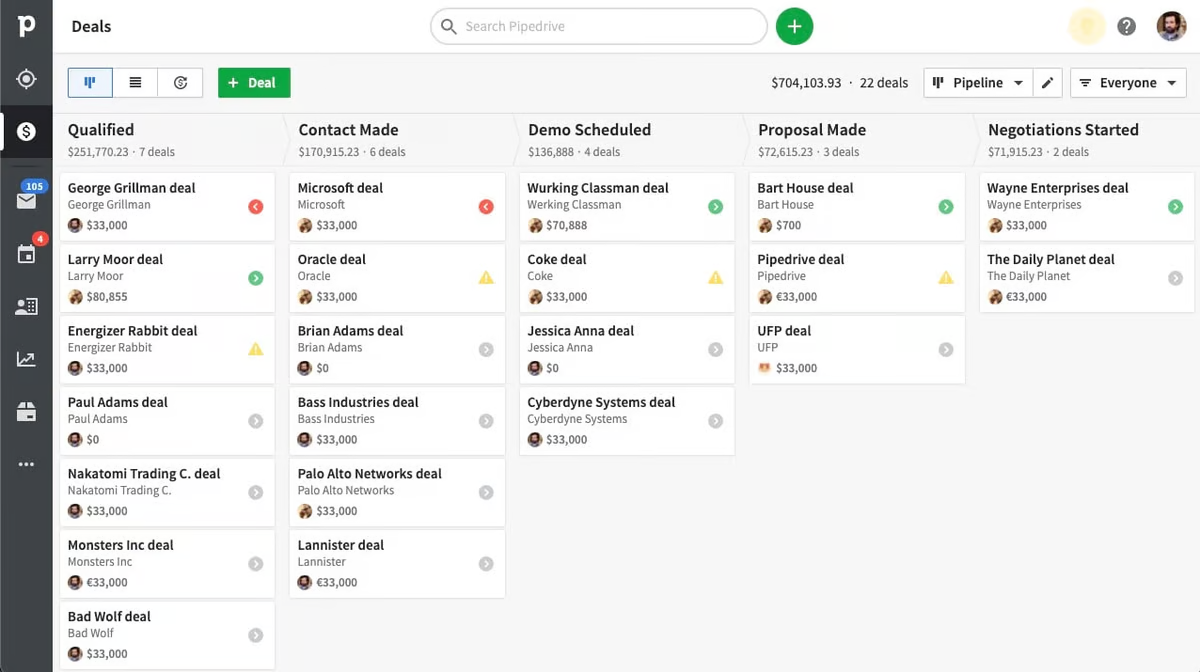
Pipedrive is built for one thing: managing your sales pipeline. If you're running a B2B sales process with clear stages, it's a great pick.
You get deal tracking, contact timelines, activity reminders, and basic automation. The UI is clean and the learning curve is minimal.
Pros
- Visual pipeline interface
- Great for structured sales teams
- Easy to set up and use
Cons
- Lacks advanced collaboration tools
- Not ideal for managing multiple workflows (e.g., clients + hiring)
- Reporting is basic unless you upgrade
Best for
Sales-driven teams who need pipeline visibility more than flexibility.
Pipedrive vs Zoho CRM
- Pipedrive is much simpler and easier to use than Zoho CRM.
- Zoho has broader functionality (marketing, finance, etc.), but that comes with complexity.
- Pipedrive wins on sales-focused UX; Zoho wins on all-in-one features.
4. Freshsales
⭐⭐⭐⭐(G2)
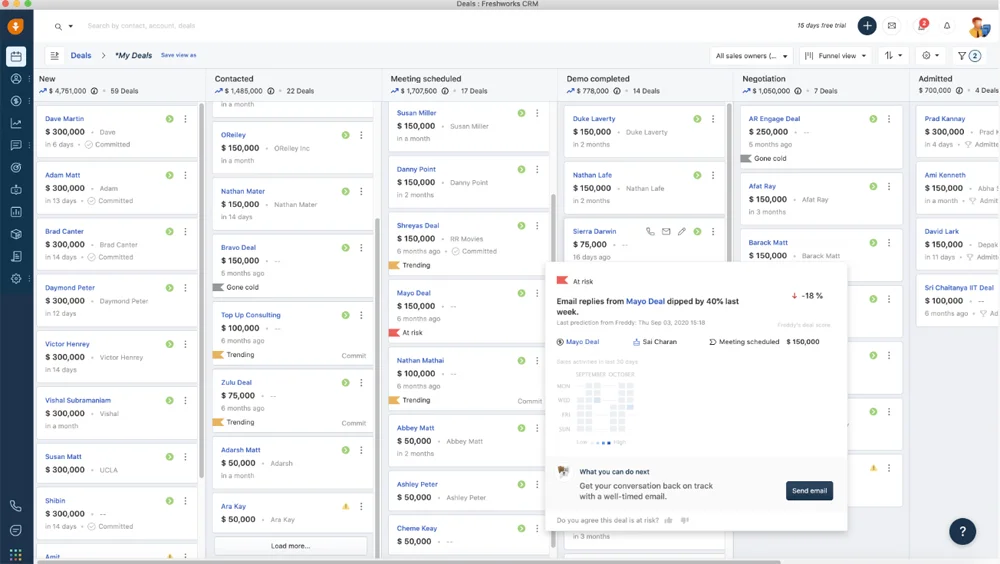
Part of the Freshworks suite, Freshsales is a solid CRM option for growing SMBs. It combines contact management, sales tracking, and customer support.
It's affordable, fairly easy to use, and integrates well with other Freshworks tools (like Freshdesk).
Pros
- Built-in phone and email tools
- AI-based lead scoring
- Affordable pricing tiers
- Marketing + sales in one place
Cons
- Interface isn't as modern as competitors
- Some features feel clunky or underpowered
- Limited third-party integrations
Best for
Businesses already using Freshworks tools, or those needing basic support + CRM in one.
Freshsales vs Zoho CRM
- Zoho is more modular and customizable.
- Freshsales is easier to implement and more focused on sales automation.
- Freshsales is more user-friendly for small teams; Zoho is better suited for large, multi-department orgs.
5. Close CRM
⭐⭐⭐⭐(G2)
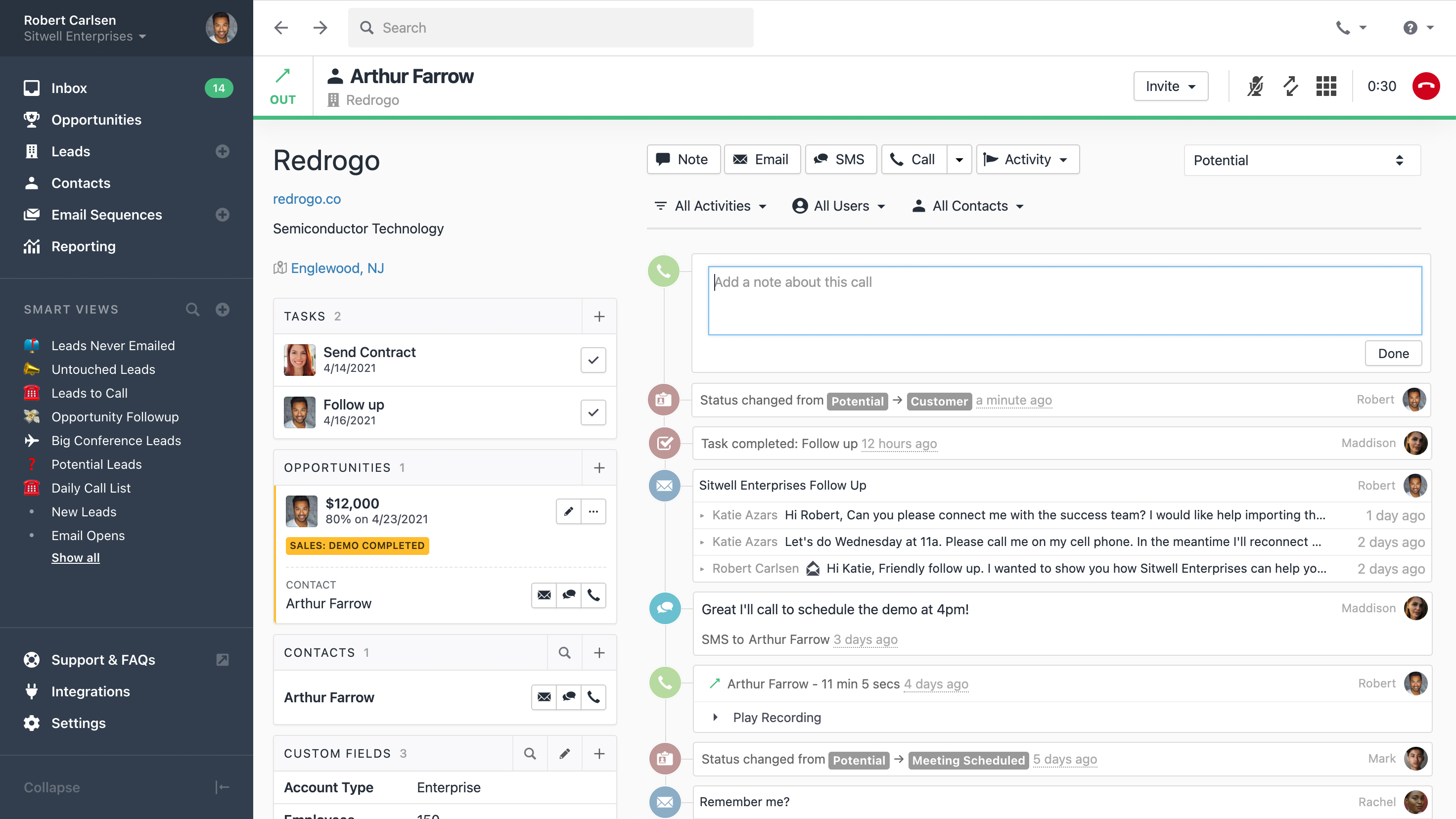
Close is a CRM built for high-volume inside sales teams. Think call centers, SDRs, or startups doing lots of cold outreach.
It's less of a general CRM, more of a sales engine with built-in calling, email automation, and powerful sequences.
Pros
- Native calling + SMS
- Smart automation for follow-ups
- Detailed activity tracking
- Great for outbound sales
Cons
- Not built for general CRM use (e.g., client management)
- Expensive for small teams
- Interface can feel crowded
Best for
Teams doing outbound sales at scale.
Close CRM vs Zoho CRM
- Zoho is more versatile but less focused on outreach.
- Close is better for SDRs and sales teams doing dozens of touches daily.
- Zoho wins on modules and customization; Close wins on speed and efficiency.
6. Salesforce
⭐⭐⭐⭐(G2)
You already know Salesforce. It's the OG enterprise CRM. Powerful, customizable, and extremely… complicated.
Salesforce is like a blank slate—you can build anything with it, but it'll cost you time, money, and developer hours.

Pros
- Endless customization
- Deep analytics
- Massive app ecosystem
Cons
- Very expensive
- Steep learning curve
- Requires technical expertise
Best for
Enterprises with dedicated admin teams and complex workflows.
Salesforce vs Zoho CRM
- Zoho is easier and cheaper, but less scalable.
- Salesforce is built for enterprise-grade CRM, Zoho is more mid-market.
- Use Salesforce only if you need its depth and can afford its complexity.
7. Insightly
⭐⭐⭐⭐(G2)
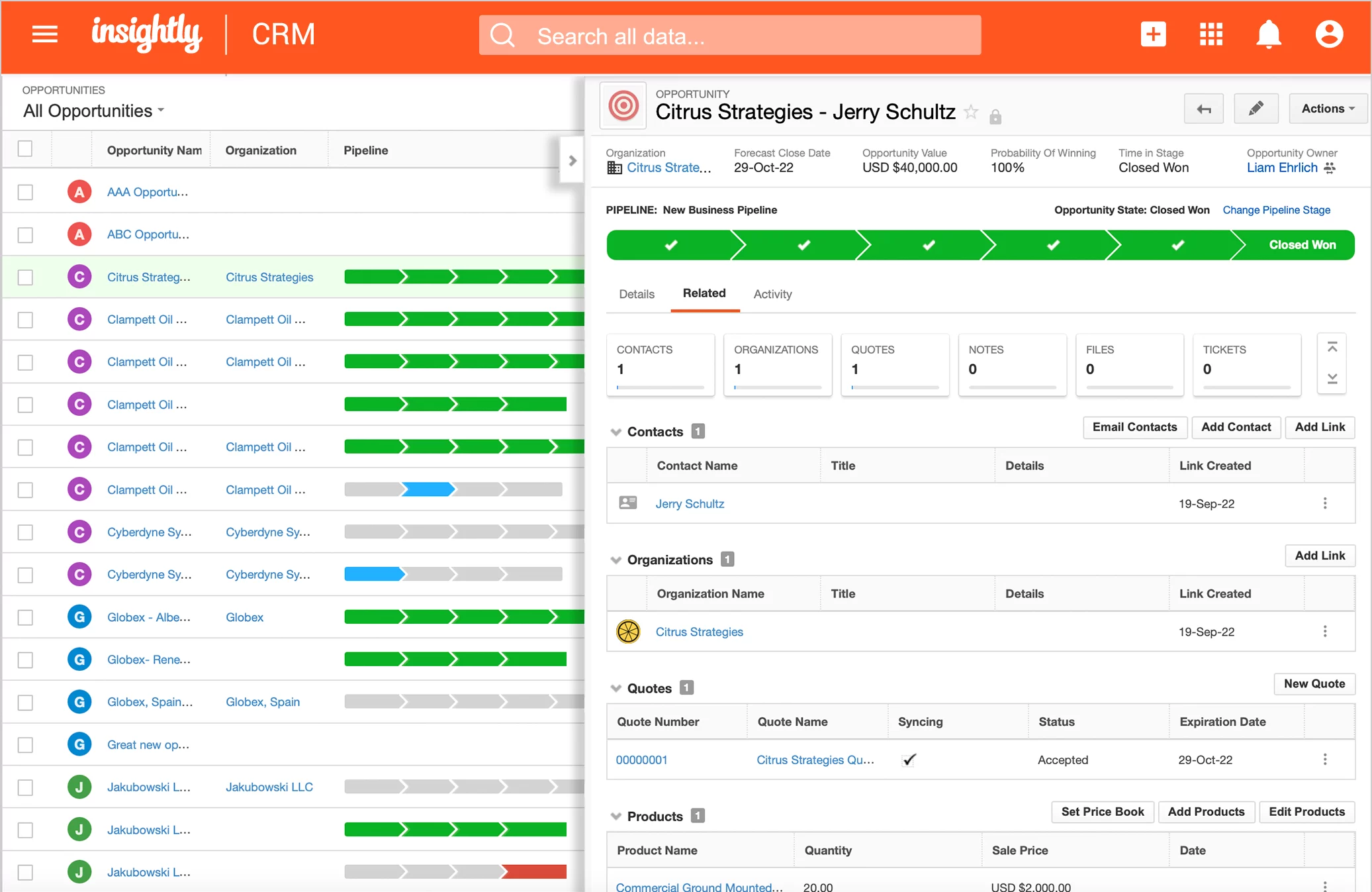
Insightly blends CRM with light project management features, making it useful for teams that juggle both clients and tasks.
You get pipeline management, task tracking, and some marketing automation—all in one place.
Pros
- Good value for the price
- Combines CRM and project management
- Email templates and campaign tools
Cons
- UI is outdated
- Limited customization
- Reporting can feel clunky
Best for
Agencies and teams with overlapping sales + project workflows.
Insightly vs Zoho CRM
- Zoho is more robust overall, with better integrations and modules.
- Insightly is easier to manage but not as scalable.
- Choose Insightly if you need a light CRM + PM combo without Zoho's complexity.
8. Keap (Infusionsoft)
⭐⭐⭐⭐(G2)
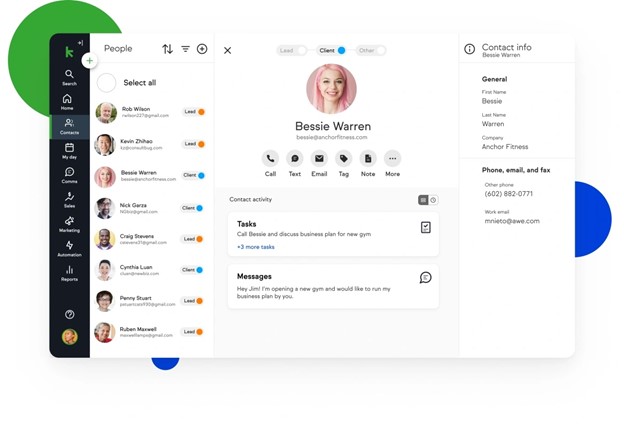
Keap is all about marketing automation. It's ideal for solopreneurs and small business owners who want to automate follow-ups, emails, and lead nurturing.
Think of it as a CRM crossed with an email marketing platform—powerful, but not super intuitive.
Pros
- Advanced marketing workflows
- Tag-based contact management
- Great for lead scoring and segmentation
Cons
- Steep learning curve
- Dated interface
- Expensive for what it offers
Best for
Coaches, consultants, and solopreneurs who live and breathe email marketing.
Keap vs Zoho CRM
- Keap is stronger on email automation, Zoho is better as a full CRM suite.
- Zoho is more scalable and structured; Keap is more niche and marketing-focused.
- Choose Keap if email is your main channel
Conclusion: Choose the Right Zoho CRM Alternative for Your Team
Choosing a CRM isn't about finding the tool with the most features—it's about finding the right fit for your team, your workflows, and your growth goals.
While Zoho CRM is a powerful platform, it's often overkill for small and mid-sized teams who need agility, not complexity.
If you're looking for a cleaner, faster, and more collaborative alternative, folk CRM stands out as the ideal solution for teams of 20-50 people. It's built for modern teams who want to manage relationships efficiently without getting bogged down in enterprise-level complexity.
FAQ
Why switch from Zoho CRM?
Many small and mid-sized teams find Zoho complex to set up and manage. Alternatives offer faster onboarding, cleaner UX, and focused features for contact management, outreach, and collaboration without enterprise overhead.
What is the best alternative to Zoho CRM in 2025?
For simplicity and collaboration, folk CRM suits teams of 20–50. For sales pipelines, Pipedrive is strong. HubSpot offers an all-in-one suite but costs more. Freshsales balances price and features for SMBs.
Is HubSpot or Zoho CRM better for growing teams?
HubSpot is easier to learn and strong for marketing, but gets expensive as you scale. Zoho is more modular and customizable with a steeper learning curve. Choose HubSpot for usability; choose Zoho for configurability and lower entry cost.
How to choose the right Zoho CRM alternative?
Define users and workflows, list must-have features (pipeline, email, automation), check integrations, test onboarding and support, and compare total cost at your target seat count. Prioritize tools your team will adopt quickly.
Discover folk CRM
Like the sales assistant your team never had