


Discover folk - the CRM for people-powered businesses
| Main points |
|---|
|
Who this guide is for
As a UK business with 20-50 employees, managing customer relationships, tracking sales opportunities, and coordinating team efforts becomes increasingly complex without the right systems in place. A Customer Relationship Management (CRM) system can transform how your growing team operates by centralizing customer data, automating workflows, and providing the visibility needed to scale efficiently. The right CRM will enable your team to collaborate seamlessly, maintain consistent customer experiences, and drive predictable growth.
In this blog post, we'll explore the best CRM options for UK businesses with teams of 20-50 people, focusing on tools that offer the perfect balance of functionality, scalability, and team collaboration features to support your expanding operations.
The 6 best CRMs for small business UK
| CRM Tool | Best For | Pros | Cons | Starting Price |
|---|---|---|---|---|
| folk | Teams of 20-50 people, UK scaling businesses | LinkedIn/email sync, AI features, team collaboration, clean UX | Advanced reporting and forecasting available (pipeline/stage analytics, weighted forecasts, and performance breakdowns by owner, channel, region, or custom fields) | $20/user/month |
| OnePageCRM | Sales-focused teams under 30 | Easy to use, affordable, follow-up reminders | Limited team features and no free plan | $9.95 per user/month |
| HubSpot | Marketing-heavy teams wanting full suite | Free plan, full suite, automation | Expensive at scale for 20-50 users | Free; paid from $15/user/month |
| Zoho CRM | Teams needing heavy customization | Affordable, customizable, AI | Complex setup, steep learning curve for teams | Free (3 users); paid from $20/user/month |
| Capsule CRM | Simple CRM for smaller teams | Easy to use, great for contact tracking | Limited scalability for growing teams | From $21/user/month |
| Streak | Gmail-first teams under 20 people | Built into Gmail, fast setup | Gmail-only, limited team features | From $49/user/month |
👉🏼 Try folk now to organise your team's contacts and pipelines
Who this guide is for
As a UK business with 20-50 employees, managing customer relationships, tracking sales opportunities, and coordinating team efforts becomes increasingly complex without the right systems in place. A Customer Relationship Management (CRM) system can transform how your growing team operates by centralizing customer data, automating workflows, and providing the visibility needed to scale efficiently. The right CRM will enable your team to collaborate seamlessly, maintain consistent customer experiences, and drive predictable growth.
In this blog post, we'll explore the best CRM options for UK businesses with teams of 20-50 people, focusing on tools that offer the perfect balance of functionality, scalability, and team collaboration features to support your expanding operations.
1. folk
folk is the ideal CRM platform for UK teams of 20-50 people, offering customizable pipelines, AI-driven tools, and seamless team collaboration features designed to scale with growing businesses without the complexity of enterprise solutions.

Key features
- Contact enrichment: Perfect for teams of 20-50 who need to automatically enrich contact details, finding emails and LinkedIn URLs at scale without manual data entry or expensive third-party tools.
- Social media integration: Seamlessly import contacts from LinkedIn, Sales Navigator, Instagram and more - essential for growing teams managing multiple prospect sources and client touchpoints.
- Mail merge and email sequences: Full email sync, templates, and tracking features, enabling teams to coordinate outreach campaigns and maintain consistent messaging across all team members.
- AI-Powered Features: AI tools specifically designed for medium-sized teams to automate routine tasks, suggest next actions, and help team members stay aligned on priorities.
- Team-focused Integrations: folk integrates seamlessly with over 6,000 apps, including Gmail, Zapier, and Make, perfect for teams that need to coordinate across multiple tools and workflows.
Pros
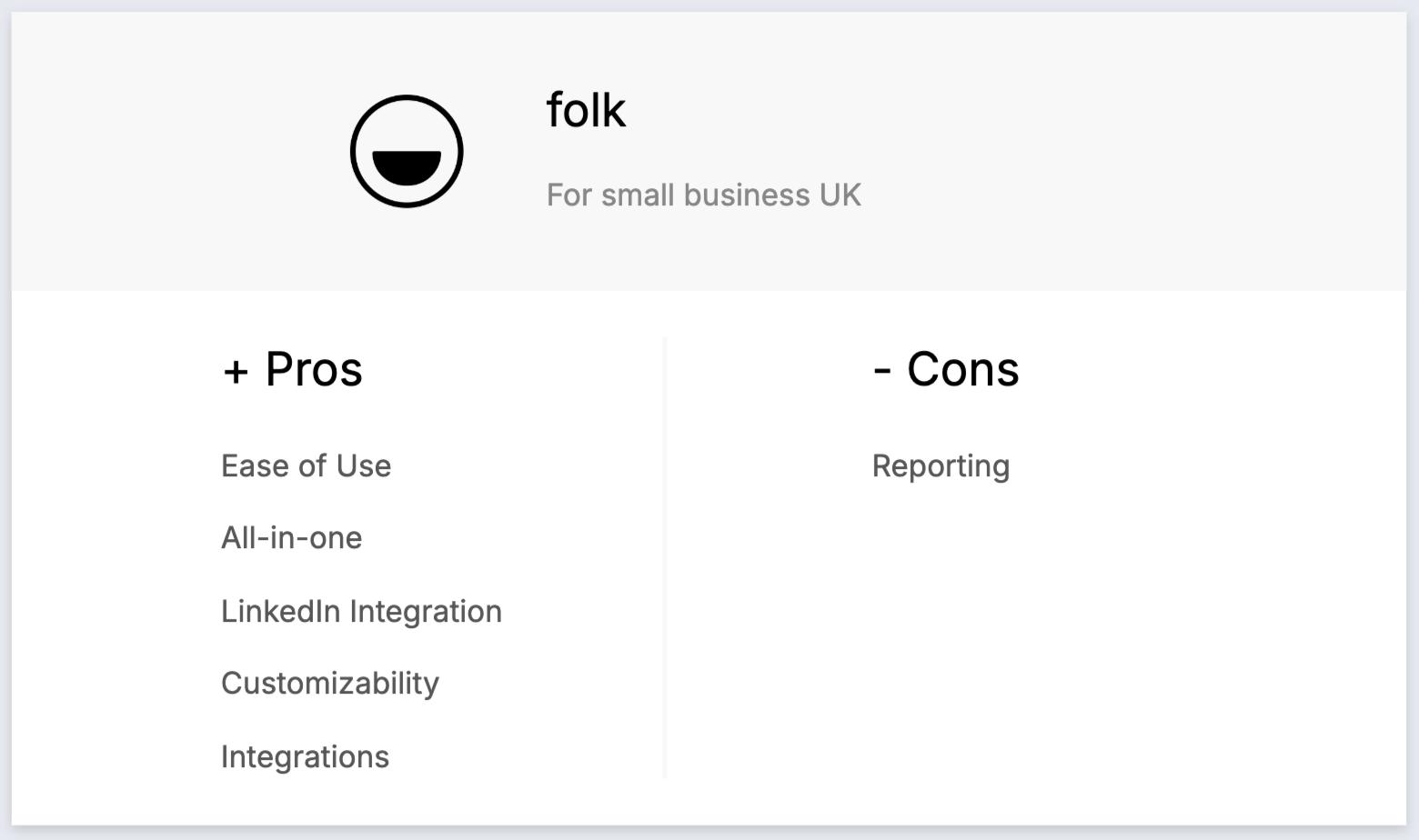
- Perfect for team collaboration: folk's intuitive interface makes it easy for teams of 20-50 to onboard quickly, collaborate effectively, and maintain consistent processes without extensive training.
- All-in-one solution for growing teams: folk eliminates the need for multiple tools by combining LinkedIn prospecting, email automation, pipeline management, and team coordination in one platform, reducing costs and complexity.
- Scalable customization: Custom fields, pipelines, dashboards, and automation workflows that grow with your team, allowing different departments to customize their processes while maintaining unified data.
- Team-centric integrations: With 6,000+ integrations, folk seamlessly connects with the tools your team already uses, creating a unified workflow that scales from 20 to 50+ users effortlessly.
Cons
- Advanced reporting and analytics are available, including pipeline and deal stage analytics, weighted revenue forecasting, and customizable performance breakdowns by owner, channel, region, or any custom field.
Price and plans
folk offers transparent pricing perfect for teams of 20-50, with a 14-day free trial to test team adoption. Monthly or annual subscription plans are:
- Standard: $20 per user, per month - ideal for most teams of 20-50 people.
- Premium: $40 per user, per month - includes advanced automation and team features.
- Custom: Starts from $60 per user, per month for teams needing enterprise-level customization.
👉🏼 Try folk now to never miss a follow-up with team-shared reminders
2. OnePageCRM
OnePageCRM is a straightforward CRM designed for smaller sales teams. It focuses on follow-up management and simple lead tracking, though it may lack the collaboration features needed for teams approaching 30-50 people.

Key Features
- Action Stream: Organizes contacts based on follow-up urgency, though this approach may become overwhelming for larger teams managing multiple prospects simultaneously.
- Bulk emailing: Basic email integration that works well for individual users but lacks the advanced team coordination features needed for larger sales teams.
- Lead capture: Browser extension for capturing leads, though it doesn't offer the comprehensive LinkedIn integration that growing teams typically require.
- Mailchimp integration: Connects with Mailchimp for marketing automation, but integration options are limited compared to what teams of 20-50 typically need.
- Business card scanner: Mobile scanning feature that works well for individual users but lacks team-wide contact sharing capabilities.
Pros
- Simple interface: Very easy to learn and use, making it suitable for smaller teams with straightforward needs.
- Affordable pricing: Cost-effective for teams under 20 people, with pricing in GBP starting at £8.25 per user/month.
- Good support: Responsive customer support across all plan levels, including trial users.
- GDPR compliance: Based in Ireland, ensuring full GDPR compliance for UK businesses.
- Follow-up focus: Excellent for maintaining consistent follow-up schedules across smaller teams.
Cons
- Limited team features: Lacks the collaboration tools and shared workflows that teams of 20-50 people typically require for effective coordination.
- Basic reporting: Simple dashboard and reports that may not provide the insights needed for larger team management and performance tracking.
- No free plan: While there's a 21-day trial, there's no free tier to test long-term team adoption.
- Scalability concerns: May become limiting as teams grow beyond 20-30 users due to lack of advanced features.
Price and plans
OnePageCRM offers a 21-day free trial, with two paid plans suitable for smaller teams:
- Professional: $9.95 per user/month
- Business: $19.95 per user/month
3. HubSpot
HubSpot CRM is a comprehensive platform offering integrated sales, marketing, and customer service tools, though costs can escalate quickly for teams of 20-50 people requiring advanced features.

Key features
- Marketing Hub: Comprehensive email marketing and lead generation tools, though may be overkill for teams focused primarily on sales and customer management.
- Sales Hub: Robust deal tracking and pipeline management, but advanced features require expensive upgrades that can be costly for 20-50 person teams.
- Service Hub: Customer service tools including ticketing and live chat, adding value for teams managing customer support alongside sales.
- Operations Hub: Business process automation, though setup complexity may require dedicated technical resources that smaller teams lack.
- Lead scoring: Predictive scoring to prioritize leads, though this feature is limited in lower-tier plans that fit smaller team budgets.
Pros
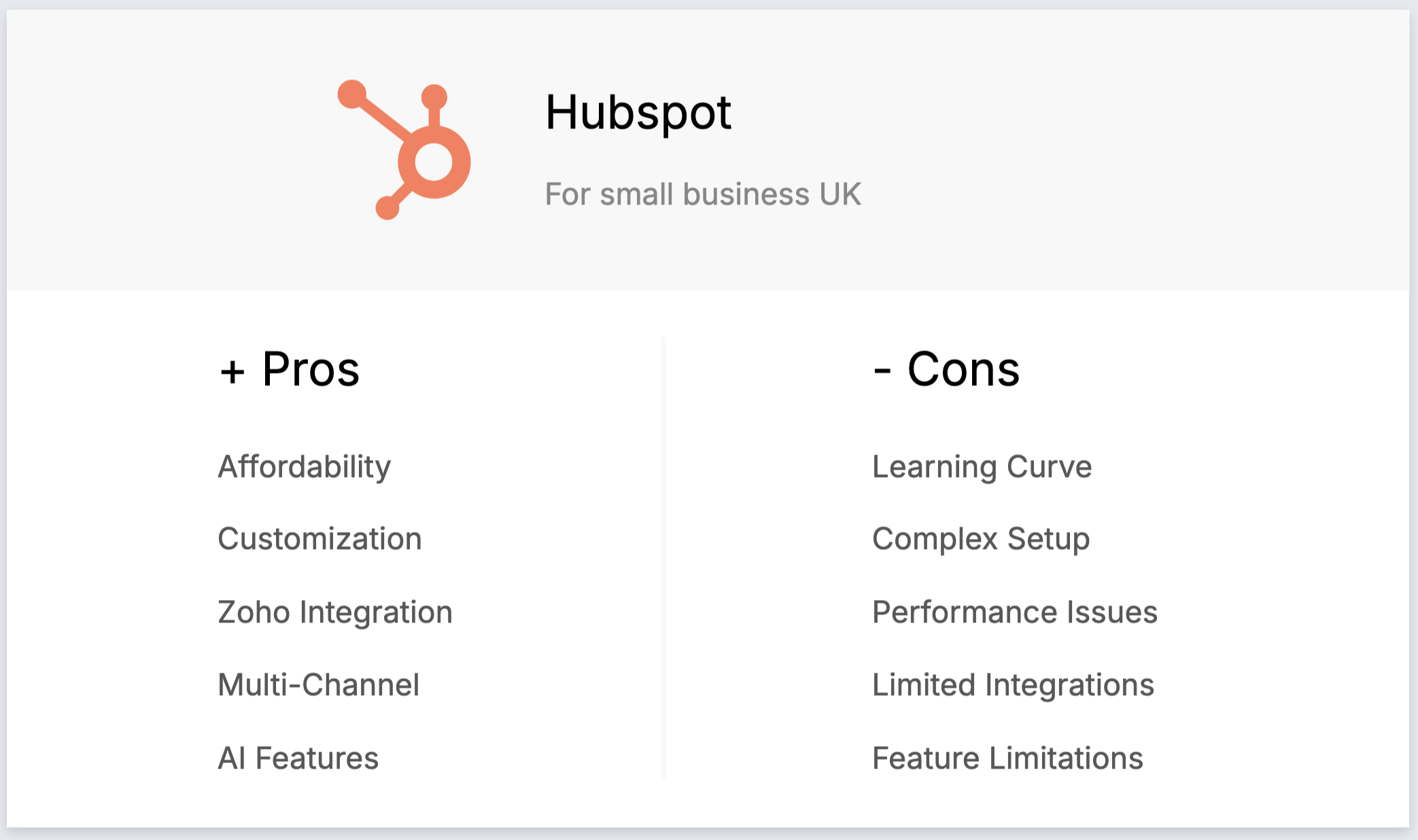
- User-friendly interface: Intuitive design that works well for team adoption across different skill levels within organizations of 20-50 people.
- Comprehensive free plan: Good starting point for smaller teams, though limitations become apparent as teams grow and need advanced features.
- Integrated platform: All-in-one solution for teams that need marketing, sales, and service capabilities in one platform.
- Strong automation: Powerful workflow automation for teams that can afford higher-tier plans with advanced features.
- Learning resources: Extensive training materials through HubSpot Academy, valuable for team-wide adoption and skill development.
Cons
- Expensive scaling: Costs become prohibitive quickly for teams of 20-50 people, with professional plans starting at $450/month total, making it less cost-effective than alternatives.
- Limited free features: Many essential team collaboration and advanced CRM features require expensive paid upgrades.
- Complex advanced setup: Higher-tier features have steep learning curves that may require dedicated training for teams of 20-50 people.
- Email limits: Free plan email restrictions can be limiting for growing teams with active outreach campaigns.
- Add-on costs: Many features that teams of 20-50 need come as expensive add-ons, significantly increasing total cost of ownership.
Prices and plans
HubSpot offers a free plan with limitations, but pricing for teams becomes expensive quickly:
- Starter: $15 per user, per month (limited features for growing teams).
- Professional: $450 total per month (becomes expensive for 20-50 person teams).
- Enterprise: $1,500 total per month (prohibitive for most teams of this size).
4. Zoho
Zoho is a highly customizable CRM with extensive features, but its complexity and setup requirements can be challenging for teams of 20-50 people who need quick deployment and easy adoption.

Key features
- Sales automation: Comprehensive automation capabilities, though setup complexity may require significant time investment from teams.
- Customizable dashboards: Extensive customization options that can be powerful but overwhelming for teams needing quick deployment and consistent use across 20-50 people.
- Multi-channel communication: Broad communication integration, though coordination across team members can be complex to manage.
- Contact management: Robust contact handling with segmentation, though the interface may require extensive training for team-wide adoption.
- Workflow automation: Powerful automation tools that require technical expertise to implement effectively across medium-sized teams.
Pros
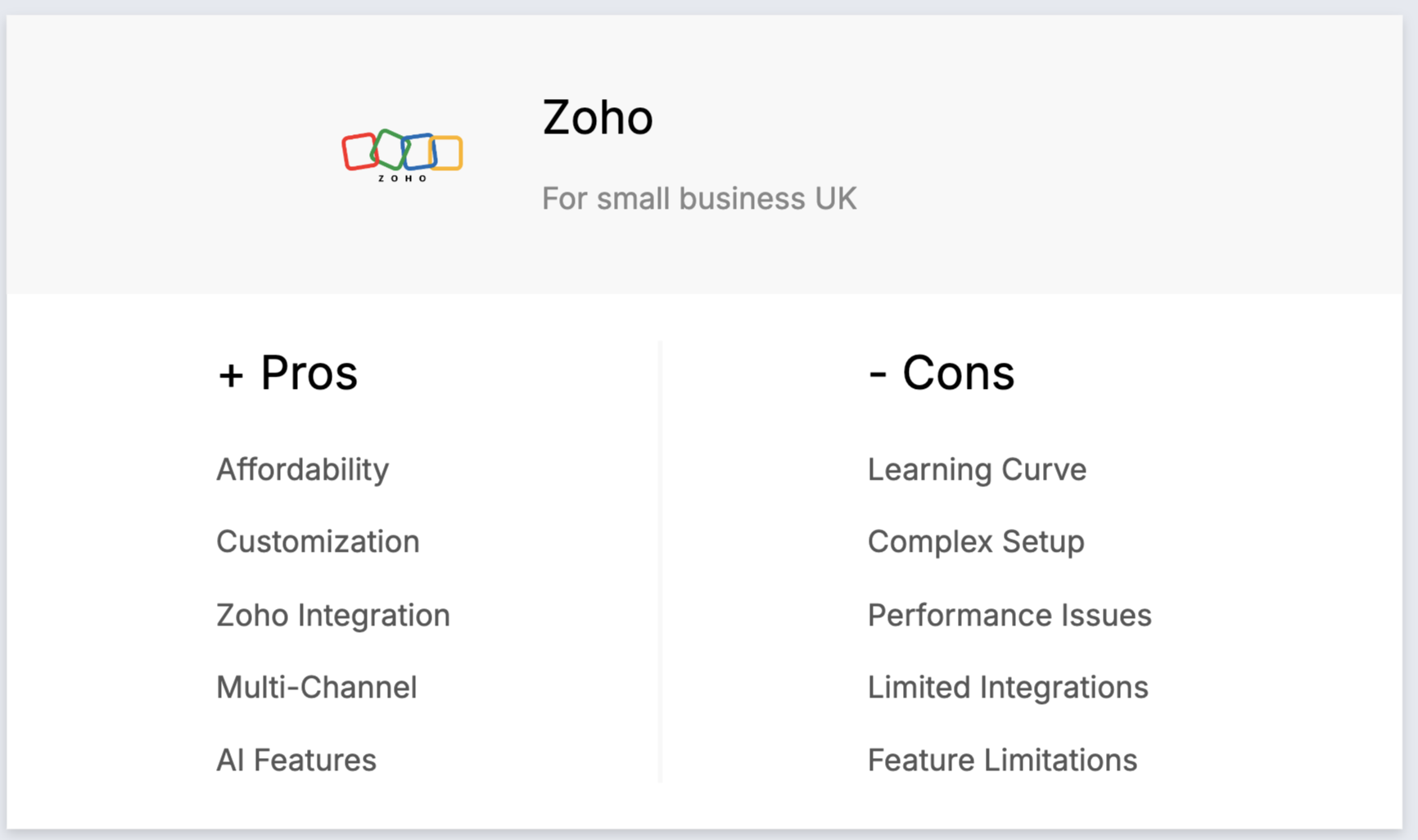
- Competitive pricing: Affordable entry point with various tiers, making it budget-friendly for teams of 20-50 people initially.
- Extensive customization: Deep customization capabilities for teams with specific workflow requirements and technical resources to implement them.
- Zoho ecosystem: Integration with other Zoho products creates a comprehensive business suite for teams using multiple Zoho applications.
- Multi-channel support: Handles email, phone, social media, and chat from one platform, good for teams managing diverse communication channels.
- AI features: Zia AI assistant provides insights and automation, though effectiveness depends on proper setup and data quality.
Cons
- Steep learning curve: Complex interface and setup requirements can be overwhelming for teams of 20-50 people who need quick adoption across all team members.
- Time-intensive setup: Initial configuration and customization can take weeks or months, delaying team productivity and ROI.
- Performance issues: Can be slow with larger datasets, which teams of 20-50 people often accumulate quickly as they scale.
- Limited third-party integrations: While Zoho integrates well within its ecosystem, connecting with other tools your team uses may require workarounds.
- Feature complexity: Many features require upgrading to higher tiers, and even then may be too complex for teams without dedicated CRM administrators.
Prices and plans
Zoho offers a limited free plan for 3 users, with annual pricing for larger teams:
- Standard: $20 per user, per month.
- Professional: $35 per user, per month.
- Enterprise: $50 per user, per month.
5. Capsule CRM
Capsule CRM is a user-friendly customer relationship management platform designed primarily for smaller teams. While it offers simplicity and ease of use, it may lack the scalability and advanced features needed by teams of 20-50 people.

Key features
- Single sales pipeline: Simple pipeline management that may be limiting for teams of 20-50 who often need multiple pipelines for different products, services, or team divisions.
- Contact storage: Handles up to 30,000 contacts, which is adequate but may lack the advanced contact management features larger teams require.
- Basic integrations: Connects with Microsoft 365 and Mailchimp, though integration options are limited compared to what growing teams typically need.
- Simple automation: Basic workflow automation that may not be sufficient for the complex processes teams of 20-50 people often require.
- Task management: Basic task tracking, though it lacks the advanced team coordination and assignment features larger teams need.
Pros
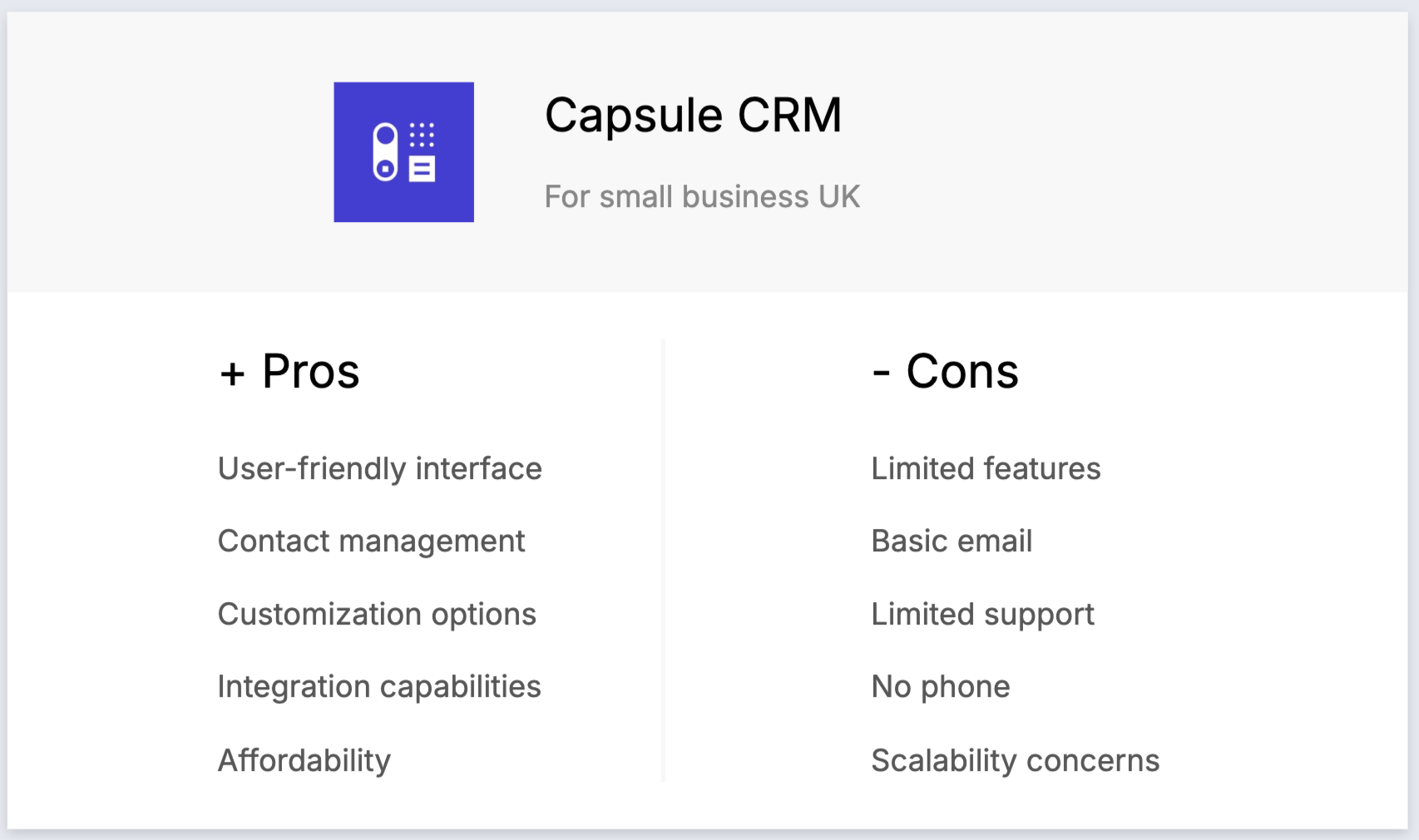
- Simple interface: Clean design that's easy for small teams to adopt, though may feel limiting as teams grow to 20-50 people with more complex needs.
- Good contact management: Solid basic contact organization, suitable for smaller teams but may lack advanced features for larger team coordination.
- Customization options: Some ability to customize fields and tags, though not as extensive as what growing teams typically require.
- Decent integrations: Works with popular business tools, though integration options are more limited than competitors focused on larger teams.
- Reasonable pricing: Competitive pricing for basic features, though costs can add up as teams need more advanced functionality.
Cons
- Limited scalability: Designed more for smaller teams and may not scale effectively to handle the complex workflows and collaboration needs of 20-50 person teams.
- Basic automation: Limited automation capabilities compared to what teams of 20-50 people typically need for efficiency and coordination.
- Simple reporting: Basic analytics that may not provide the insights needed for managing larger teams and complex sales processes.
- Limited team features: Lacks advanced team collaboration, territory management, and role-based access controls that larger teams require.
- Support limitations: Primarily email and help center support, which may not be sufficient for larger teams needing quick resolution of issues.
Prices and plans
Capsule's annual pricing can become expensive as team size grows:
- Starter plan: $21 per user, per month.
- Growth plan: $38 per user, per month.
- Advanced plan: $60 per user, per month.
- Ultimate plan: $75 per user, per month.
6. Streak
Streak is a Gmail-integrated CRM that works well for individual users or very small teams, but lacks the robust features and scalability needed for teams of 20-50 people who require advanced collaboration and comprehensive CRM functionality.

Key features
- Gmail integration: Built directly into Gmail, which can be convenient for small teams but limiting for larger teams that need standalone CRM functionality and team coordination features.
- Email tracking: Basic email tracking and snippets, though it lacks the comprehensive email management and team coordination features that teams of 20-50 people require.

Pros
- Gmail integration: Seamless Gmail integration for teams already heavily invested in Google Workspace, though this can become limiting for larger team coordination.
- Easy setup: Quick to implement for individual users, though team-wide deployment and management becomes more complex with 20-50 people.
- Email automation: Decent email tracking and automated follow-ups for individual users, but lacks team-wide coordination features.
- Google-focused: Works well within Google ecosystem, suitable for teams exclusively using Google tools but limiting for mixed technology environments.
Cons
- Gmail dependency: Completely tied to Gmail, making it unsuitable for teams using other email platforms or needing standalone CRM functionality for team coordination.
- Limited CRM features: Lacks advanced CRM capabilities like comprehensive reporting, team management, territory assignment, and role-based access that teams of 20-50 people require.
- Poor mobile experience: Limited mobile functionality makes it difficult for larger teams who need CRM access across different devices and locations.
- Few integrations: Minimal integration options beyond Google tools, limiting for teams using diverse software stacks common in 20-50 person organizations.
- Email clutter: Managing CRM data within Gmail can become chaotic for teams handling large volumes of prospects and customers, reducing productivity.
Prices and plans
- Pro: $49 per user, per month (expensive for teams of 20-50 given limited features).
- Pro +: $69 per user, per month.
- Enterprise: $129 per user, per month.
Why UK Small Businesses Need a CRM
For UK businesses with teams of 20-50 people, having the right CRM becomes critical for maintaining efficiency, coordination, and growth. At this size, manual processes that worked for smaller teams become bottlenecks, and the lack of centralized systems creates confusion and missed opportunities.
Challenges without a CRM
Teams of 20-50 people face unique challenges when operating without a proper CRM system:
- Team coordination breakdown: Without centralized data, team members work in silos, leading to duplicated efforts and inconsistent customer experiences.
- Scalability bottlenecks: Manual processes that worked for smaller teams become overwhelming, preventing efficient scaling of operations.
- Lost accountability: Difficulty tracking who's responsible for which prospects and customers, leading to tasks falling through the cracks.
- Inconsistent processes: Different team members follow different approaches, creating confusion and reducing overall team effectiveness.
- Limited visibility: Management lacks clear visibility into team performance, pipeline health, and individual contributions.
Benefits of a CRM
The right CRM transforms how teams of 20-50 people operate, providing structure and efficiency that enables sustainable growth:
- Centralized team coordination: All customer data and interactions are accessible to relevant team members, enabling seamless collaboration and handoffs.
- Scalable processes: Standardized workflows and automation allow teams to handle increasing workloads without proportional increases in complexity.
- Clear accountability: Defined ownership of prospects and customers, with visibility into individual and team performance metrics.
- Consistent customer experience: Unified processes and shared information ensure customers receive consistent service regardless of which team member they interact with.
- Data-driven decisions: Team leaders can make informed decisions about resource allocation, performance management, and growth strategies.
- Efficient onboarding: New team members can quickly understand processes and access the information they need to be productive.
How to evaluate and choose a CRM platform
For teams of 20-50 people, choosing the right CRM requires careful consideration of factors that become critical at this scale - team adoption, collaboration features, and growth potential.
1. Define your requirements
Teams of 20-50 people need CRMs that balance functionality with ease of use. Focus on features like team collaboration tools, role-based access, pipeline management, and integration capabilities. Consider how different departments within your team will use the system - sales, marketing, customer success - and ensure the CRM can support varied workflows while maintaining data consistency across your growing organization.
2. Budget considerations
At 20-50 users, CRM costs become a significant budget item. Calculate total cost including per-user fees, setup costs, training time, and potential add-ons. While solutions like HubSpot may seem attractive with free tiers, the cost can quickly escalate to thousands per month as you need advanced features. Consider how pricing scales with your team growth and whether the CRM provides clear ROI through improved efficiency and revenue.
3. Selection process
Focus on vendors with proven success with teams your size. Look for case studies from similar UK businesses, check references, and evaluate the quality of customer support - at 20-50 users, you'll need responsive help when issues arise. Consider implementation timelines and whether the vendor provides adequate training resources for team-wide adoption.
4. Get a demo
Run comprehensive trials with multiple team members across different roles. Test real-world scenarios like lead handoffs between sales and marketing, team collaboration on deals, and reporting for management oversight. Evaluate how quickly team members can become productive and whether the CRM supports your existing workflows. Get started with a demo of folk here.
3 tips for implementing a CRM
Successfully implementing a CRM across a team of 20-50 people requires careful planning and coordination to ensure smooth adoption and maximum productivity.
1. Import your data in your new CRM
For teams of 20-50 people, data migration becomes more complex with multiple data sources and team members contributing information. Plan a coordinated data cleanup before migration, assign team leads to oversee data quality, and ensure all team members understand the new data structure and entry standards.
2. Create a first pipeline
Design your pipeline to accommodate different team roles and handoff points. With 20-50 people, you'll likely need multiple pipeline stages that reflect different team responsibilities - from lead generation through customer success. Consider creating separate pipelines for different products, services, or market segments that your larger team manages.
3. Onboard your team
Team-wide onboarding becomes critical at this scale. Create role-specific training programs, identify CRM champions within each department, and establish ongoing support processes. Consider phased rollouts by department or function to ensure each group can fully adopt the system before expanding to others.
Conclusion: Which CRM is Right for You?
For UK businesses with teams of 20-50 people, the choice is clear: you need a CRM that balances powerful functionality with ease of use, scales with your growth, and provides the collaboration features essential for team coordination.
- For teams of 20-50 people: folk CRM is the ideal choice with its perfect balance of features, team collaboration tools, and scalable pricing designed for growing businesses.
- If budget is the primary concern: OnePageCRM works for smaller teams but may require upgrading as you grow.
- For marketing-heavy operations: HubSpot offers comprehensive features but becomes expensive quickly for teams your size.
- If you need heavy customization: Zoho provides extensive options but requires significant time investment and technical resources.
- For very simple needs: Capsule offers basic functionality but may not scale with your team's growth.
For most UK teams of 20-50 people, folk CRM provides the optimal combination of functionality, ease of use, team collaboration features, and cost-effectiveness needed to drive growth and maintain efficiency as you scale.
Ready to see how folk can transform your team's productivity? Use our free tool to find your perfect CRM match.
FAQ
What is the best CRM for small businesses in the UK?
The best fit depends on team size, budget, and workflow. For 20–50 users, options include folk (collaboration-focused), HubSpot (marketing suite, pricier at scale), Zoho (highly customizable), Capsule (simple), and Streak (Gmail-only).
How much does a CRM cost for a 20–50 person team?
Typical pricing is £16–£60 per user/month. For 20–50 users, expect ~£320–£3,000+ per month depending on features, add-ons, and support. Factor onboarding, data migration, and training into total cost.
How to choose a CRM for a 20–50 person team?
Define processes and must‑have features, check ease of use, role-based access, email/LinkedIn integrations, reporting, and GDPR. Run a trial with cross‑functional users, test handoffs and reporting, and assess support and implementation time.
Do small businesses need a CRM?
Yes. At 20–50 employees, spreadsheets and email threads hinder visibility and handoffs. A CRM centralises data, standardises workflows, tracks ownership, automates follow‑ups, and gives managers pipeline and performance insights.
What do small business in the UK use as a CRM?
UK businesses with teams of 20-50 people typically use folk CRM, HubSpot, Zoho, Capsule CRM, and Streak. folk CRM is increasingly popular for its team collaboration features and scalable design, while HubSpot offers extensive marketing tools but becomes expensive at scale. Zoho provides customization but requires technical resources, Capsule works for simpler needs, and Streak is limited to Gmail-focused smaller teams.
Do I need a CRM?
For teams of 20-50 people, a CRM is essential. At this scale, manual processes become bottlenecks, team coordination becomes complex, and the risk of missed opportunities increases significantly. A CRM provides the structure, automation, and visibility needed to maintain efficiency while scaling operations and ensures consistent customer experiences across your growing team.
How much does a CRM cost?
For teams of 20-50 people, CRM costs typically range from £400-£2000+ per month total. Basic solutions like folk start around £16-32 per user monthly (£320-1600 total for a 20-50 person team), while comprehensive platforms like HubSpot can cost £450-1500+ monthly regardless of team size. Consider total cost including training, setup, and add-ons when budgeting for your team size.
Does folk's CRM respond to small business UK needs?
Yes, folk CRM is specifically well-suited for UK teams of 20-50 people. It offers the perfect balance of advanced features like LinkedIn integration and AI tools, team collaboration capabilities, and scalable pricing. The intuitive interface ensures quick team-wide adoption, while customizable pipelines and automation help coordinate complex workflows across larger teams, making it ideal for growing UK businesses.
Meet folk, the AI CRM for your entire Sales motion.