


Discover folk - the CRM for people-powered businesses
| Main points |
|---|
|
TL;DR
- Audience: mid-sized sales teams (20–50) needing shared networking workflows to coordinate outreach and manage prospects effectively.
- Top pick: folk for collaboration, LinkedIn integration, and enrichment features that scale perfectly for team-based relationship building.
- How to choose: define requirements, model total cost of ownership, and validate via live demo to ensure the platform meets your team's networking needs.
For sales teams of 20-50 people, building and maintaining a robust professional network is essential to driving consistent revenue growth.
Managing hundreds of contacts, tracking communication history, nurturing relationships, and coordinating outreach efforts across your sales team can quickly become overwhelming without the right systems in place.
A Customer Relationship Management (CRM) system specifically designed for networking and sales team collaboration can transform these challenges into competitive advantages by centralizing contact management, automating follow-ups, and ensuring no opportunity slips through the cracks—all while enabling seamless team coordination.
In this blog post, we'll explore the best CRM options for sales teams focused on networking, highlighting tools that will help your 20-50 person sales organization manage prospects more effectively, coordinate outreach efforts, and build stronger relationships that convert to revenue.
Why You Need a CRM
For sales teams managing thousands of prospects and existing clients, leveraging your collective network requires having all critical information accessible to every team member. Details like recent interaction history, referral sources, buying signals, and relationship strength can make the difference between closing a deal and losing an opportunity—especially when multiple team members are involved in the sales process.
Challenges without a CRM
If you're unsure how a centralized platform can streamline your sales team's networking efforts, here are common challenges your 20-50 person team is likely experiencing without realizing the full impact.
- Team disorganization: Contact information scattered across individual spreadsheets and email inboxes creates silos and missed opportunities.
- Duplicate outreach: Team members accidentally contacting the same prospects, damaging relationships and wasting resources.
- Lost context: When team members leave or switch territories, valuable relationship history and deal context disappears.
- Inconsistent follow-up: Without systematic tracking, high-value prospects fall through the cracks during handoffs between team members.
- Limited visibility: Sales managers lack insights into team networking activities, pipeline health, and relationship quality.
Benefits of a CRM
For sales teams of your size, implementing the right CRM should deliver immediate improvements in coordination, efficiency, and results. Here's what you should expect from a platform that aligns with your team's networking and sales processes.
- Centralized team database: All prospect and client information accessible to your entire sales team, enabling seamless collaboration and knowledge sharing.
- Coordinated outreach: Automated workflows prevent duplicate contacts while ensuring consistent, professional communication across your team.
- Enhanced relationship tracking: Complete interaction history enables any team member to pick up conversations and maintain relationship continuity.
- Data-driven insights: Team performance analytics help identify top networking strategies and optimize resource allocation across your 20-50 person organization.
- Scalable processes: Standardized workflows and automation support consistent growth without proportional increases in administrative overhead.
- Improved accountability: Clear activity tracking and pipeline visibility ensure networking efforts translate into measurable sales results.
How to make the most of your networking efforts with a CRM
Sales teams of 20-50 people can maximize their collective networking power through strategic CRM implementation. From coordinating multi-channel outreach to leveraging team relationships, here are proven strategies for mid-sized sales organizations.
1. Map your team process
Define clear networking workflows that work across your entire sales team—whether focusing on digital outreach, industry events, referral programs, or all three. Establish standardized stages from initial prospect identification through relationship building, with defined handoff points between team members. Create accountability measures to ensure networking activities directly support your team's revenue goals.
2. Leverage team intelligence
Maximize the collective knowledge of your 20-50 person team by centralizing relationship insights, interaction notes, and prospect intelligence. Encourage team members to document key details like referral sources, personal connections, industry insights, and buying preferences so the entire organization benefits from individual networking efforts.
3. Coordinate systematic outreach
Replace manual, individual outreach efforts with coordinated campaigns that leverage your CRM's automation capabilities. Design personalized email sequences and multi-touch campaigns that maintain consistent communication while preventing overlap between team members targeting similar prospect segments.
4. Nurture your collective network
Use your CRM data to identify opportunities for deeper engagement across your entire client and prospect base. Develop targeted campaigns that showcase team expertise, share relevant industry insights, and invite key contacts to exclusive events, fostering stronger relationships that benefit your entire sales organization.
How to evaluate and choose a CRM platform
1. Define your requirements
For sales teams of 20-50 people, prioritize features that enhance team collaboration and networking efficiency. Essential functionalities include contact management with team sharing, activity tracking across multiple team members, integration with professional networking platforms, and automation tools that coordinate rather than complicate your team's efforts.
Key features of a CRM for sales team networking
- Team collaboration tools: Enables seamless sharing of prospect information and coordination of outreach efforts across your sales organization.
- Contact enrichment: Automatically finds prospect email addresses and contact information, enhancing efficiency for your entire team.
- Multi-stage pipelines: Tracks prospects through defined sales stages with clear visibility for team leads and managers.
- Automated sequences: Increases team communication efficiency with coordinated follow-up templates and scheduled outreach campaigns.
- Professional network integration: Seamlessly imports contacts from LinkedIn and other platforms to centralize prospect information for team access.
- Team analytics: Provides performance insights and forecasting capabilities essential for managing mid-sized sales organizations.
2. Budget considerations
For teams of 20-50 people, CRM costs can quickly escalate, making value-driven selection critical. Look for platforms that offer transparent per-user pricing without hidden fees for essential features. Calculate the total cost of ownership including onboarding, training, and integration expenses to ensure your investment delivers measurable ROI for your sales team's networking efforts.
3. Selection process
Involve key stakeholders from across your sales team in the evaluation process. Gather input from team leads, individual contributors, and sales management to ensure the chosen platform meets diverse needs. Request references from other mid-sized sales organizations and prioritize vendors offering comprehensive onboarding support for teams your size.
4. Get a demo
Test each platform with real scenarios specific to sales teams of your size. Evaluate how well each CRM handles team coordination, territory management, and networking workflow automation. Pay special attention to user experience and learning curve, as adoption across 20-50 users requires intuitive design. Get started with a demo of folk here.
👉🏼 Try folk now to coordinate outreach and manage contact-based reminders with your team
3 tips for implementing a CRM
1. Import your team data systematically
Coordinate data migration across your entire sales team to ensure comprehensive coverage. Collect contact databases from all team members and standardize the information before importing. Most CRMs support CSV imports, making it easier to consolidate individual spreadsheets and email contacts into one centralized system that serves your entire 20-50 person organization.
2. Design team-oriented pipelines
Create pipeline stages that reflect your team's collaborative sales process, incorporating handoff points between team members and clear ownership assignments. Include stages like "Team Qualified," "Demo Scheduled," "Proposal Sent," and "Deal Won" that provide visibility into both individual and team performance across your networking and sales activities.
3. Ensure comprehensive team adoption
Successful CRM implementation for mid-sized teams requires organization-wide buy-in and consistent usage. Conduct comprehensive training sessions for different user types, establish data entry standards, and create accountability measures to ensure networking information is regularly updated. Designate CRM champions within different team segments to drive adoption and provide ongoing support.
The 5 best CRMs for networking
1. folk
For sales teams of 20-50 people focused on networking excellence, folk stands out as the ideal CRM platform. Designed specifically for collaborative sales environments, folk combines powerful networking tools with intuitive team management features that scale perfectly for mid-sized organizations seeking to maximize their collective relationship-building efforts.

Key features
- Contact enrichment: Automatically enriches contact details by finding emails and LinkedIn URLs, enabling your entire sales team to execute efficient outreach without manual data entry or additional per-contact costs.
- LinkedIn Sales Navigator integration: Seamlessly import contacts from LinkedIn, Instagram, X and other platforms, allowing your team to track all prospect information in real time and coordinate outreach using shared templates.
- Team email management: Full email sync compatible with Gmail and Outlook including shared templates and team tracking features, enabling your sales organization to manage all communications centrally while maintaining individual accountability.
- AI-powered team insights: AI tools assist in managing team contacts and relationships, automating routine tasks, and suggesting actions that improve both individual and collective productivity across your 20-50 person sales organization.
- Enterprise integrations: folk integrates seamlessly with over 6,000 apps, including Gmail, Zapier, and Make, allowing your team to centralize workflows and eliminate manual data entry across multiple platforms.
- Mobile app: Access your team's contacts, reminders, and outreach on the go with the folk mobile app.

Pros
- Designed for team collaboration: folk's interface prioritizes team visibility and coordination, making it simple for sales teams of 20-50 people to share prospects, coordinate outreach, and maintain relationship continuity across team members.
- All-in-one networking powerhouse: folk eliminates the need for multiple tools by combining LinkedIn prospecting, email enrichment, automated sequences, and pipeline management in one platform, reducing costs and complexity for mid-sized teams.
- Professional network optimization: Advanced LinkedIn integration allows your team to import prospects from Sales Navigator, track engagement across team members, and coordinate personalized outreach that maximizes your collective networking efforts.
- Scalable customization: Extensive customization across fields, pipelines, dashboards, and automation workflows that grows with your team while maintaining simplicity for individual users.
- Cost-effective integrations: With over 6,000 app integrations, folk connects your existing sales stack without requiring expensive middleware or custom development, perfect for budget-conscious mid-sized teams.
Cons
- Comprehensive analytics available: folk CRM includes advanced analytics such as pipeline and deal stage analysis, revenue forecasting with weighted probabilities, and customizable breakdowns by owner, channel, industry, region, and any custom field.
Price and plans
folk offers transparent pricing that scales perfectly for teams of 20-50 people, with a 14-day free trial to test all features with your entire team.
- Standard: $20 per user, per month - ideal for growing sales teams needing core networking features.
- Premium: $40 per user, per month - perfect for established teams requiring advanced automation and integrations.
- Custom: Starts from $60 per user, per month - designed for teams needing enterprise-level features and support.
2. HubSpot
While Hubspot CRM offers comprehensive features for larger enterprises, it can become complex and expensive for focused sales teams of 20-50 people primarily interested in networking efficiency.

Key features
- Marketing Hub: Comprehensive email marketing and lead generation tools, though many features exceed the needs of networking-focused sales teams.
- Sales Hub: Deal tracking and pipeline management with extensive customization options that may require significant setup time for mid-sized teams.
- Lead scoring: Advanced predictive scoring features that can be overly complex for straightforward networking and relationship management.
- Operations Hub: Enterprise-level automation and integration capabilities that may overwhelm teams seeking networking efficiency.
- Advanced reporting: Extensive analytics and dashboards that provide more data than most 20-50 person sales teams need for networking activities.

Pros
- Comprehensive free plan: Offers basic CRM functionality at no cost, suitable for teams just starting with CRM adoption.
- Extensive feature set: Provides a complete suite of marketing, sales, and service tools for organizations needing full-scale operations management.
- Strong brand recognition: Well-established platform with extensive online resources and community support.
- Scalable architecture: Can grow with organizations expanding beyond 50+ team members into enterprise-level operations.
- Integration ecosystem: Connects with numerous third-party applications, though setup can be complex.
Cons
- Expensive for teams of 20-50: Professional plans cost $450+ per month for the full team, significantly more expensive than networking-focused alternatives.
- Over-engineered for networking: Many features are unnecessary for teams primarily focused on relationship building and prospect management.
- Complex setup requirements: Advanced features require significant configuration time and ongoing management overhead.
- Limited free plan networking features: Basic plan lacks essential tools for professional networking and LinkedIn integration.
- Steep learning curve: Extensive feature set creates longer onboarding times for mid-sized sales teams seeking simplicity.
Prices and plans
HubSpot offers a free plan with basic features, but professional networking capabilities require significant investment for teams of 20-50 people.
- Starter: $15 per user, per month - very limited networking features.
- Professional: $450 total per month - expensive for mid-sized teams.
- Enterprise: $1,500 total per month - designed for large enterprise organizations.
3. Less Annoying CRM
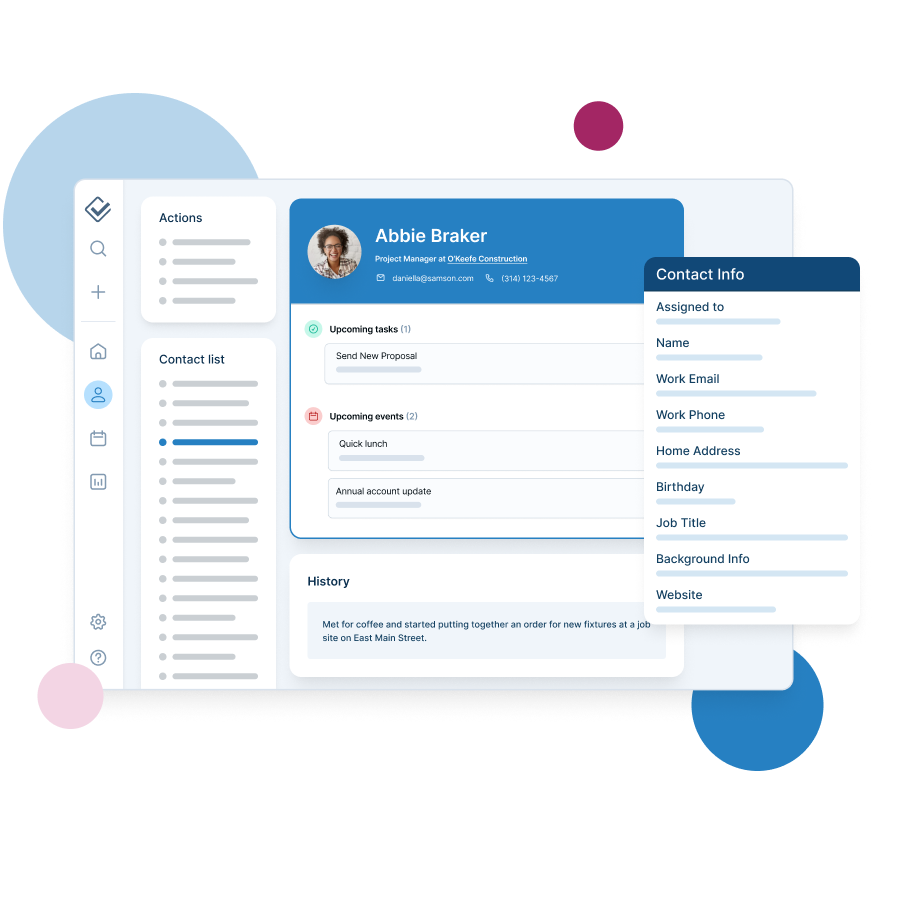
Less Annoying CRM offers basic customer relationship management focused on simplicity, but lacks the advanced networking features and team collaboration tools essential for sales teams of 20-50 people.
Key features
- Basic contact management
- Simple pipeline tracking
- Basic email integration
- Limited user permissions
- Basic mobile access

Pros
- Simple interface: Easy to use for teams new to CRM systems, though limited in functionality.
- Affordable pricing: Low-cost option for budget-conscious teams willing to sacrifice advanced features.
- No contracts: Month-to-month pricing provides flexibility for short-term testing.
- Responsive support: Personalized customer service, though limited technical capabilities.
- Free trial: 30-day trial period allows teams to evaluate basic functionality.
Cons
- Lacks networking features: No LinkedIn integration, contact enrichment, or social media tools essential for modern sales team networking.
- Limited team collaboration: Basic sharing features inadequate for coordinating outreach across 20-50 person sales organizations.
- No automation: Manual processes required for follow-ups and email sequences, reducing team efficiency.
- Basic reporting: Minimal analytics and insights for tracking team networking performance and ROI.
- Few integrations: Limited connections to essential sales tools, creating workflow inefficiencies for mid-sized teams.
Price and plans
Single plan available at $15 per user, per month, but lacks features necessary for effective sales team networking.
4. Capsule CRM
Capsule CRM provides basic customer relationship management for small businesses but lacks the networking-specific features and scalability required for sales teams of 20-50 people focused on relationship building and prospect management.

Key features
- Contact storage: Manages up to 30,000 contacts, though without advanced networking features for sales teams.
- Basic integrations: Limited connections with Microsoft 365 and Mailchimp, lacking modern networking tool integration.
- Simple task management: Basic follow-up reminders, but no advanced automation for team coordination.
- Basic workflows: Limited automation capabilities insufficient for coordinated sales team networking efforts.
- Standard reporting: Basic activity reports lacking insights necessary for optimizing team networking strategies.

Pros
- Clean interface: Simple design that's easy to navigate, though limited in advanced functionality.
- Basic customization: Some field and pipeline customization options for simple sales processes.
- Affordable entry point: Lower cost option for teams with minimal CRM requirements.
- Standard integrations: Connects with common business tools, though limited compared to specialized platforms.
- Established platform: Stable software with consistent updates and support.
Cons
- No networking specialization: Lacks LinkedIn integration, contact enrichment, and social media tools critical for modern sales team networking.
- Limited team features: Basic collaboration tools insufficient for coordinating networking efforts across 20-50 person organizations.
- Basic automation: Minimal workflow automation requires manual processes that don't scale for mid-sized teams.
- Weak email capabilities: Limited built-in email marketing requiring third-party solutions for effective outreach campaigns.
- Scalability concerns: Platform limitations become apparent as teams grow beyond basic contact management needs.
Price and plans
- Starter plan: $21 per user, per month - basic features only.
- Growth plan: $38 per user, per month - limited networking capabilities.
- Advanced plan: $60 per user, per month - still lacks professional networking tools.
- Ultimate plan: $75 per user, per month - expensive for features offered.
5. Streak
While Streak integrates directly with Gmail for basic CRM functionality, it lacks the comprehensive networking features and team collaboration tools necessary for sales teams of 20-50 people to effectively manage prospects and coordinate outreach efforts.

Key features
- Gmail integration: CRM functionality within Gmail interface, though limited for comprehensive networking needs.
- Basic pipeline sharing: Team members can view shared pipelines, but coordination features are limited.
- Email tracking: Basic email tracking capabilities, though lacking advanced networking analytics.
- Contact management: Simple contact organization within Gmail, but no enrichment or social media integration.
- Google Workspace sync: Integrates with Google tools, though limited compared to specialized networking platforms.

Pros
- Familiar Gmail interface: Easy adoption for teams already using Gmail, though limited in functionality.
- Quick setup: Minimal configuration required, though this means fewer customization options for team needs.
- Google integration: Works within existing Google Workspace environments.
- Basic collaboration: Team members can share simple pipeline information.
- Email-centric approach: Natural integration with email workflows, though lacks modern networking capabilities.
Cons
- Gmail dependency: Limited to Gmail users, excluding teams using other email platforms or requiring comprehensive CRM functionality.
- No networking specialization: Lacks LinkedIn integration, contact enrichment, and social media tools essential for modern sales networking.
- Limited team coordination: Basic sharing features insufficient for managing complex networking efforts across 20-50 person organizations.
- Weak mobile experience: Limited functionality outside of desktop Gmail, reducing flexibility for field sales activities.
- Email interface limitations: Managing extensive prospect databases within email creates clutter and reduces efficiency for larger teams.
Price and plans
- Pro: $49 per user, per month - expensive for limited networking features.
- Pro +: $69 per user, per month - still lacks comprehensive networking capabilities.
- Enterprise: $129 per user, per month - prohibitively expensive for mid-sized teams.
Conclusion
For sales teams of 20-50 people, selecting the right CRM can transform your networking efforts from individual activities into coordinated team advantages. While several platforms offer basic relationship management, folk CRM stands out as the clear choice for teams prioritizing networking excellence. With its seamless LinkedIn integration, automated contact enrichment, team collaboration features, and transparent pricing designed for mid-sized organizations, folk provides everything your sales team needs to build stronger relationships and drive consistent revenue growth. The combination of professional networking tools, team coordination capabilities, and cost-effective scalability makes folk CRM the optimal solution for sales organizations ready to maximize their collective networking potential.
👉🏼 Try folk now to never miss a follow-up and keep team networking organized
Don't miss the opportunity to try folk for free here.
Need a helping hand? Use our free tool to find your perfect CRM match.
FAQ
What is the best CRM for networking for a 20–50 person team?
It depends on needs. For networking-focused teams, prioritize LinkedIn integration, contact enrichment, shared pipelines, and email sequences. folk meets these with enrichment and Sales Navigator import: folk.
Do mid-sized sales teams need a CRM?
Yes. A CRM centralizes contacts and history, prevents duplicate outreach, automates follow-ups, and gives managers visibility. This coordination improves response rates, preserves context during handoffs, and helps teams hit targets.
How much does a CRM cost for a team of 20–50?
Expect $15–$75 per user/month; advanced suites can exceed $100. Budget for onboarding, training, integrations, and add-ons. folk pricing starts at $20/user/month, Premium at $40, and Custom from $60, suitable for mid-sized teams.
What features should a CRM have for networking?
Must-haves: LinkedIn import, contact enrichment, shared pipelines, email sync and sequences, activity tracking, permissions, and team analytics. These enable coordinated outreach, consistent follow-ups, and scalable processes.
Meet folk, the AI CRM for your entire Sales motion.