


Descubre folk el CRM para empresas impulsadas por personas.
En el acelerado mundo de las startups, perder negocios a menudo tiene menos que ver con el producto y más con el caos de los seguimientos sin control y la comunicación fragmentada. Un CRM robusto para startups ofrece una solución potente a este problema, garantizando que cada interacción, cada paso siguiente y cada responsable sean visibles en todo momento y fácilmente accesibles.
Dos populares contendientes en el ámbito del CRM, Attio y monday Sales CRM, presentan enfoques distintos para abordar los retos a los que se enfrentan las empresas emergentes. Attio se centra en un marco centrado en los datos e impulsado por las relaciones que se adapta a las necesidades dinámicas de los procesos de ventas modernos. Por el contrario, monday Sales CRM a la perfección con su plataforma de gestión del trabajo, dando prioridad a la visibilidad y la colaboración para los equipos que ya forman parte del ecosistema monday.
Este artículo profundiza en un análisis comparativo entre Attio y monday Sales CRM, destacando sus características clave, fortalezas y debilidades en elementos cruciales como la gestión de contactos, la claridad del proceso de ventas, las capacidades de automatización y la rentabilidad general a medida que tu startup crece.
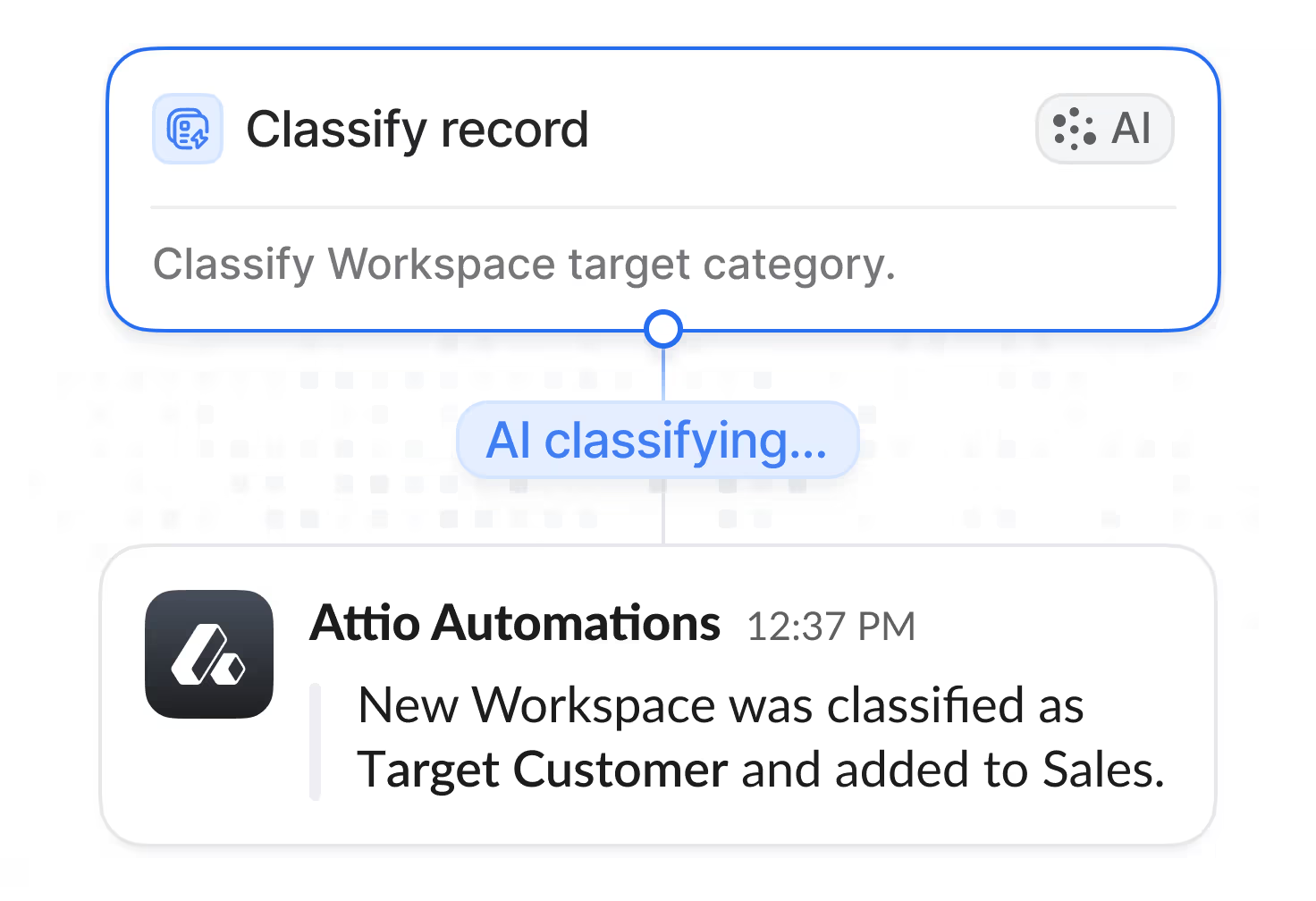
¿Qué es Attio?
Attio es un CRM moderno y centrado en los datos, diseñado para startups que buscan flexibilidad y un modelado optimizado. Es ideal para equipos que gestionan relaciones dinámicas y necesitan vistas personalizadas, enriquecimiento de datos y flujos de trabajo estructurados sin las limitaciones de una configuración empresarial. Attio destaca en estrategias de comercialización basadas en las relaciones y se adapta fácilmente a procesos de ventas únicos. Fomenta la creación de un CRM que se ajuste a tus datos, en lugar de adaptarse a estructuras rígidas. Sin embargo, algunas empresas pueden necesitar herramientas adicionales para la automatización del marketing o flujos de trabajo de servicios avanzados.
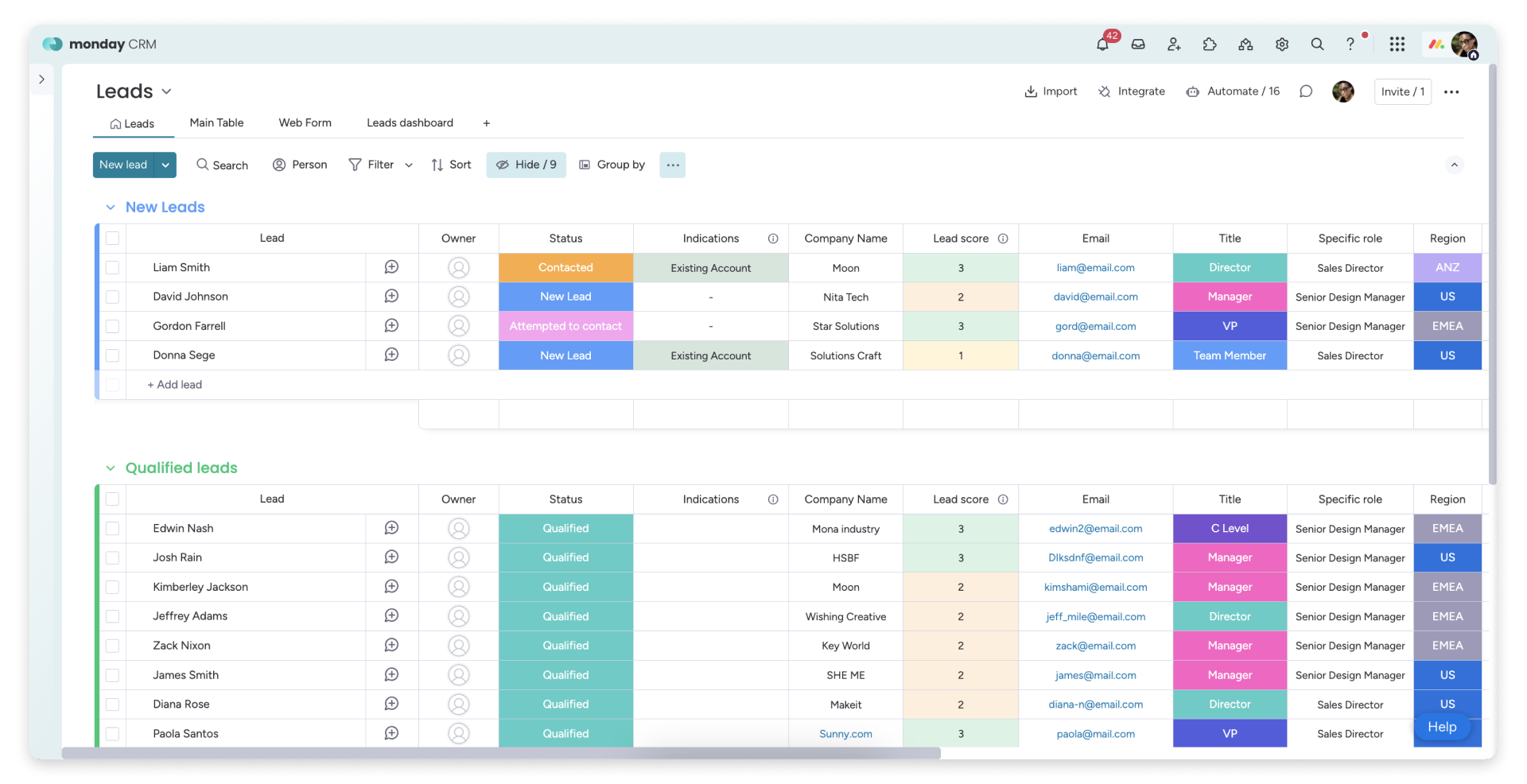
¿Qué es el lunes?
monday Sales CRM es una capa de CRM diseñada para equipos que ya operan en monday.com. Está dirigida a startups que buscan gestionar clientes potenciales, oportunidades de venta y procesos posventa, todo ello dentro del mismo marco de gestión del trabajo. Sus puntos fuertes residen en la visibilidad y la colaboración entre tareas, procesos de ventas y traspasos entre equipos. La plataforma se puede configurar rápidamente y mejorar con automatizaciones para minimizar las actualizaciones manuales. Aunque es ideal para equipos orientados a las operaciones, aquellos que necesiten análisis de CRM en profundidad y modelos de datos complejos podrían requerir herramientas adicionales.
Comparación de características entre Attio y monday
1. Sincronización del correo electrónico y el calendario
Attio sincroniza a la perfección los datos de correo electrónico y calendario de las cuentas de Google y Microsoft, lo que garantiza que los mensajes y eventos se vinculen con precisión a los registros correspondientes. La sincronización del correo electrónico se realiza a través de Gmail, lo que permite a Attio rellenar automáticamente los registros de personas y empresas basándose en el historial de la bandeja de entrada. Los eventos del calendario se sincronizan con la actividad del correo electrónico, creando una línea temporal de relaciones que refleja las interacciones reales. Este enfoque optimizado minimiza el registro manual y mantiene el contexto de las transacciones en todo el espacio de trabajo, lo que lo hace ideal para las empresas emergentes que buscan un CRM basado en el historial de comunicaciones.
monday Sales CRM las actividades de correo electrónico y calendario a través de integraciones especializadas, lo que garantiza que la comunicación permanezca visible dentro de la línea de tiempo del registro. La integración con Outlook conecta tanto los correos electrónicos como los eventos del calendario con monday, lo que facilita los flujos de trabajo basados en el correo electrónico desde una vista general. Por su parte, la integración con Google Calendar sincroniza las actividades del calendario con la línea de tiempo del CRM, centralizando las reuniones y los puntos de contacto. El resultado es un espacio unificado para revisar las conversaciones recientes y los próximos eventos, perfecto para los equipos que desean integrar el contexto del CRM en su flujo de trabajo de gestión laboral.
2. Limpieza de datos de contacto mediante enriquecimiento y deduplicación
Attio enriquece automáticamente los registros de personas y empresas con datos esenciales, como logotipos, fotos de perfil, nombres de usuario en redes sociales y descripciones. Estos atributos enriquecidos se actualizan cada vez que Attio descubre nueva información, lo que garantiza que los registros se mantengan actualizados sin necesidad de realizar búsquedas manuales. La limpieza de duplicados se gestiona de forma eficiente mediante una función de fusión tanto para personas como para empresas, que avisa a los usuarios cuando se identifican duplicados por dirección de correo electrónico o dominio de la empresa. Este proceso de fusión consolida las propiedades en un único registro y elimina los duplicados, manteniendo la usabilidad de los datos de contacto a medida que se amplían las listas.
monday también ofrece un sólido sistema de gestión de duplicados con un flujo de fusión que combina elementos y conserva el historial de actualizaciones. Las entradas duplicadas se pueden fusionar en un elemento principal, archivando los duplicados y transfiriendo sus actualizaciones. Esta funcionalidad es esencial para mantener registros limpios, especialmente cuando los clientes potenciales o las cuentas provienen de múltiples fuentes. Este enfoque práctico es particularmente beneficioso para las empresas emergentes que dependen de importaciones e integraciones; aunque el enriquecimiento de datos a menudo proviene de la pila tecnológica, monday da prioridad a los campos estructurados y a la higiene de los datos.
3. Canalizaciones y vistas flexibles
Attio mejora la colaboración dentro del CRM al permitir comentarios, tareas y menciones directamente en los registros y entradas de la lista. Se puede mencionar a los compañeros de equipo en notas, tareas y comentarios, lo que activa notificaciones en la barra lateral. Puede crear, asignar y realizar un seguimiento de las tareas para garantizar que los siguientes pasos sigan siendo visibles y se asignen a alguien. Con los controles de uso compartido y permisos, los equipos pueden gestionar quién puede ver o editar áreas específicas del espacio de trabajo, lo que garantiza que la coordinación se integre perfectamente con los registros en lugar de dispersarse en múltiples hilos.
monday Sales CRM la gestión del proceso de ventas mediante un panel de operaciones diseñado para el seguimiento por etapas. Su vista Kanban del proceso de ventas permite mover fácilmente las operaciones de una etapa a otra mediante arrastrar y soltar, lo que hace que el estado de las operaciones sea intuitivo y sencillo. Las etapas y columnas se pueden personalizar para adaptarse a los procesos de ventas de una startup sin necesidad de una configuración exhaustiva. Además, los filtros y las vistas ayudan a diferenciar entre actividades entrantes, salientes, renovaciones o actividades de socios, lo que mantiene la configuración centrada en las operaciones y orientada a la ejecución.
4. Colaboración en equipo
Attio mejora la colaboración dentro del CRM al permitir comentarios, tareas y menciones directamente en los registros y entradas de la lista. Se puede mencionar a los compañeros de equipo en notas, tareas y comentarios, lo que genera notificaciones en la barra lateral. Se pueden crear, asignar y realizar un seguimiento de las tareas, lo que garantiza que los siguientes pasos estén claramente definidos y sean visibles. Los controles de uso compartido y permisos permiten a los equipos gestionar quién puede ver o editar áreas específicas del espacio de trabajo, manteniendo la coordinación vinculada a los registros en lugar de dispersa en hilos separados.
monday está diseñado intrínsecamente para la colaboración, lo que garantiza que el trabajo relacionado con CRM siga siendo visible para todos los equipos sin necesidad de cambiar de herramienta. Los registros permiten actualizaciones y debates encadenados directamente vinculados a los elementos, lo que mantiene el contexto close acuerdo o la cuenta. Las columnas claras de propiedad, asignación y estado mejoran la responsabilidad durante los traspasos. Las vistas se pueden compartir para sincronizar las ventas, el éxito y las operaciones en una realidad de canalización unificada, mientras que los permisos y las estructuras de los tableros mantienen la colaboración organizada a medida que el equipo se expande.
5. Automatización e integraciones ligeras
Attio se conecta a la perfección con herramientas externas a través de flujos de trabajo e integraciones, incluida una integración con Zapier que permite la automatización en miles de aplicaciones. Con Zapier, puede activar flujos de trabajo basados en cambios en Attio o enviar datos desde otros sistemas a Attio. Para soluciones personalizadas, Attio ofrece una REST API pública REST API admite suscripciones en tiempo real a través de webhooks. Además, la plataforma para desarrolladores cuenta con un SDK de aplicaciones, que le permite integrar aplicaciones directamente en la interfaz de Attio. Este enfoque ofrece a las empresas emergentes opciones sin código y fáciles de usar para los desarrolladores para la automatización y la sincronización de datos.
monday facilita la automatización mediante recetas integradas que activan acciones cuando cambian los estados, llegan las fechas o los elementos avanzan por las etapas. Las integraciones mejoran esta funcionalidad con conectores y flujos de trabajo sin código, incluidas las conexiones Zapier para las pilas de startups más populares. Para necesidades más complejas, monday ofrece una API GraphQL que permite la lectura y escritura programática de datos. Esta flexibilidad le permite empezar poco a poco con flujos de trabajo ligeros y ampliarlos a medida que evolucionan sus procesos, todo ello manteniendo la automatización gestionable gracias a una lógica clara.
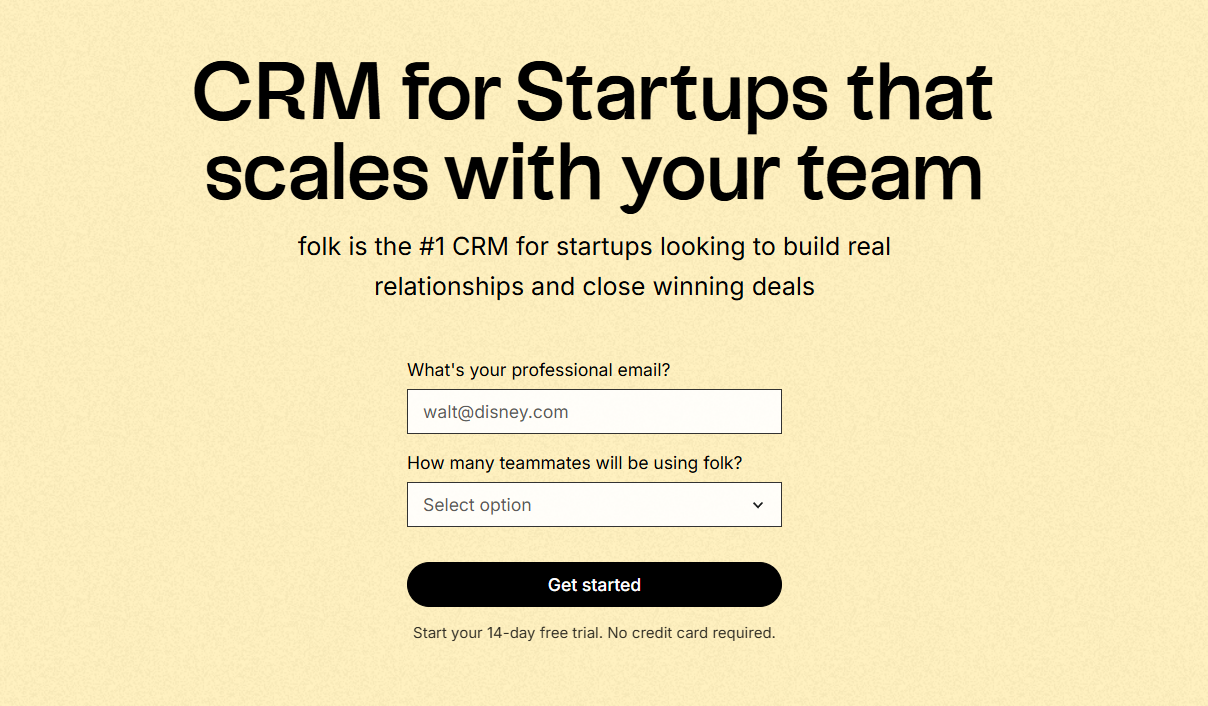
folk : El CRM definitivo para startups en 2026
folk un CRM moderno diseñado específicamente para startups que gestionan relaciones a través de Gmail, Google Calendar, LinkedIn y hojas de cálculo. Consolida contactos, empresas, acuerdos, notas, archivos y todas las interacciones en un único espacio de trabajo ligero, lo que garantiza que el contexto del proceso permanezca conectado a conversaciones reales en lugar de dispersarse en múltiples pestañas.
Características clave que encantan a las startups en folk
- Sincronización perfecta entre Gmail y Google Calendar para obtener una cronología automática de actividades.
- Captura de contactos lista para LinkedIn con una práctica extensión de Chrome.
- Enriquecimiento de contactos para completar rápidamente los datos que faltan.
- Deduplicación para mantener una base de datos limpia a medida que aumenta el volumen.
- Canales y campos personalizables para adaptarse a cualquier estrategia de comercialización.
Para las empresas emergentes, folk por su rapidez en la obtención de valor y su facilidad de uso diario. La configuración es rápida, los flujos de trabajo son adaptables y se puede acceder fácilmente al contexto multicanal sin convertir el CRM en una suite difícil de manejar. Esto se traduce en un seguimiento más coherente, datos más limpios y una visión más clara de los ingresos con una fricción mínima.
Conclusión
En resumen, Attio destaca por su flexibilidad centrada en los datos y su enfoque basado en las relaciones, ideal para equipos que buscan flujos de trabajo personalizados. Por su parte, monday Sales CRM una integración perfecta con su plataforma de gestión del trabajo, haciendo hincapié en la visibilidad y la colaboración. Sin embargo, para las startups centradas en la integración del correo electrónico, la automatización y la optimización de los procesos, folk se perfila como la mejor opción. Consolida las herramientas esenciales en un espacio de trabajo ligero, garantizando una comunicación eficaz y un contexto claro sin complejidades innecesarias, lo que lo convierte en el CRM de referencia para las startups modernas.
Comience su prueba gratuita de 14 días o reserve una demostración hoy mismo.
Preguntas frecuentes
¿Qué CRM es el más adecuado para las empresas emergentes que utilizan Gmail y Google Calendar?
folk en la sincronización perfecta con Gmail y Google Calendar, lo que lo convierte en la opción más sencilla para las startups que dan prioridad al correo electrónico. Attio también es compatible con la sincronización de Google y Microsoft, mientras que monday se basa en integraciones para mostrar la actividad del correo electrónico y el calendario.
¿Attio y Monday eliminan automáticamente los contactos duplicados y enriquecen los datos?
Sí. Attio enriquece automáticamente los registros de personas y empresas y utiliza un flujo de fusión para la deduplicación, mientras que Monday ofrece un flujo de fusión que conserva el historial de actualizaciones y da prioridad a los campos estructurados para garantizar la calidad de los datos.
¿Qué plataforma ofrece las opciones de automatización y para desarrolladores más flexibles?
Tanto Attio como monday ofrecen automatización sin código a través de Zapier, además de API para desarrolladores (Attio con REST, webhooks y un SDK para aplicaciones; monday con una API GraphQL). folk en flujos de trabajo ligeros, centrados en el correo electrónico, con sincronizaciones integradas para una configuración rápida, en lugar de en herramientas de desarrollo complejas.
Te presentamos « folk », el CRM basado en IA para todo tu proceso de ventas.