Discover folk - 人材主導型ビジネス向けCRM
In the fast-paced world of startups, the smallest details can make or break a deal. Without a dedicated system, crucial follow-ups can easily get lost in the chaos of inboxes, spreadsheets, and messaging apps. A CRM for startups addresses this challenge by ensuring that every interaction, next step, and responsible owner is not just tracked but also easily accessible.
Salesforce and Attio present two distinct approaches to solving this visibility issue. Salesforce provides an enterprise-level solution with extensive customization options, governance, and support for complex revenue operations, making it ideal for startups that have outgrown basic tools. In contrast, Attio offers a modern, data-centric CRM that emphasizes flexibility and user-friendly modeling, perfect for teams navigating dynamic relationships without the constraints of traditional frameworks.
This comparison will explore the day-to-day implications of these two CRMs: from contact management and pipeline hygiene to automation capabilities, reporting clarity, and the overall cost as your team scales.
セールスフォースとは何ですか?
Salesforce is an enterprise-level CRM that offers extensive customization, governance, and support for complex revenue operations. It caters to startups that have outgrown basic tools and require stringent permissions, advanced reporting, and tailored workflows across various teams. The platform is capable of accommodating nearly any data model through custom objects and automation. Moreover, it boasts a vast ecosystem of applications and partners within the US market. However, the implementation and ongoing administrative efforts are generally more demanding than those of most CRMs, and costs can escalate quickly.

アティオとは何ですか?
Attio is a contemporary, data-centric CRM designed specifically for startups seeking flexibility and straightforward modeling. It is ideal for teams that manage dynamic relationships and require custom views, enrichment, and structured workflows without the burdens of an enterprise framework. Attio excels in relationship-driven go-to-market strategies and efficiently adapts to unique sales processes. It is particularly effective when teams prioritize developing a CRM that aligns with their data instead of adhering to rigid object structures. Some businesses may still require additional tools for marketing automation or advanced service workflows.

Feature comparison of Salesforce and Attio
メールとカレンダーの同期
Salesforce offers inbox and calendar connectivity through Outlook Integration and Gmail Integration, utilizing Einstein Activity Capture to automatically log emails and events on the activity timeline. This logged activity can be associated with related records like contacts, leads, and opportunities, ensuring that context remains accessible without the need for constant manual entry. Such a setup is ideal for sales teams that rely heavily on emails and meetings, requiring CRM visibility linked to genuine interactions. Typically, an admin manages configuration and permissions to align with governance requirements.
Attio synchronizes email and calendar data from both Google and Microsoft accounts, ensuring that messages and events are linked to the appropriate records. Email synchronization occurs through Gmail, allowing Attio to automatically populate People and Company records based on inbox history. Calendar events sync seamlessly with email activity, creating a relationship timeline that reflects real interactions. This system minimizes manual logging and maintains visibility of deal context throughout the workspace, making it particularly suitable for startups seeking a CRM grounded in communication history.
エンリッチメントと重複排除によるコンタクトデータのクリーンアップ
Salesforce offers built-in duplicate management through matching and duplicate rules designed to identify and prevent the creation of duplicate records. Depending on the configuration, these rules can alert users, prevent saves, or send potential duplicates into review workflows. For data enrichment, Salesforce leverages Data Cloud enrichments and AppExchange data providers that enhance company and contact information within the platform. This integration ensures records remain comprehensive and minimizes fragmentation across teams.
Attio automatically enriches People and Company records by adding data points such as logos, profile pictures, social media handles, and descriptions. When new data becomes available, these enriched attributes update automatically, eliminating the need for manual research. Attio also features a merge tool for People and Companies that prompts users when duplicates are found based on email address or company domain. This merging process consolidates information into a single record while removing duplicates, ensuring that contact data remains effective as your lists expand.
柔軟なパイプラインとビュー
Salesforce enhances collaboration on records through Chatter, allowing updates, discussions, and context to coexist in one central location. Users can share records within Chatter groups to facilitate team discussions and coordination for specific accounts or opportunities. Tasks, notes, and activity history create a unified framework for seamless handoffs and cross-functional visibility. With permissions and sharing controls in place, collaboration remains in sync with security requirements.
Attio streamlines work management using objects, lists, and views, offering both table and kanban views for list workflows. The kanban view visualizes a pipeline or process with distinct stages, allowing for intuitive drag-and-drop transitions between them. Teams can customize views with filters and attributes, ensuring they focus only on what is relevant at any given moment. This setup accommodates sales pipelines and various startup workflows within the same workspace, promoting flexible process tracking without imposing a rigid data model.
チームコラボレーション
Salesforce enhances collaboration directly on records through Chatter, allowing updates, discussions, and record context to reside in a single location. Users can share records within Chatter groups, facilitating team discussions and coordination on specific accounts or opportunities. Tasks, notes, and activity history create a shared operational layer for seamless handoffs and cross-functional visibility, while permissions and sharing controls ensure that collaboration adheres to security requirements.
Similarly, Attio fosters collaboration within the CRM by enabling comments, tasks, and mentions on records and list entries. Teammates can be @mentioned in notes, tasks, and comments, which triggers notifications in the sidebar. Tasks can be created, assigned, and tracked, ensuring that next steps are visible and owned. Sharing and permission controls empower teams to manage who can view or edit specific sections of the workspace, maintaining coordination directly tied to records rather than scattered across separate threads.
軽量な自動化と統合
Salesforce automation primarily utilizes Salesforce Flow, which enables declarative workflows for managing records, approvals, routing, and data updates. Integrations are facilitated through APIs, with event-driven patterns supported by platform events to ensure real-time connectivity. The AppExchange ecosystem allows for expanded automation and integrations, eliminating the need to build everything from the ground up. This framework is ideal for startups seeking scalability, extensive customization, and long-term governance, though it does require a greater investment in admin and implementation efforts.
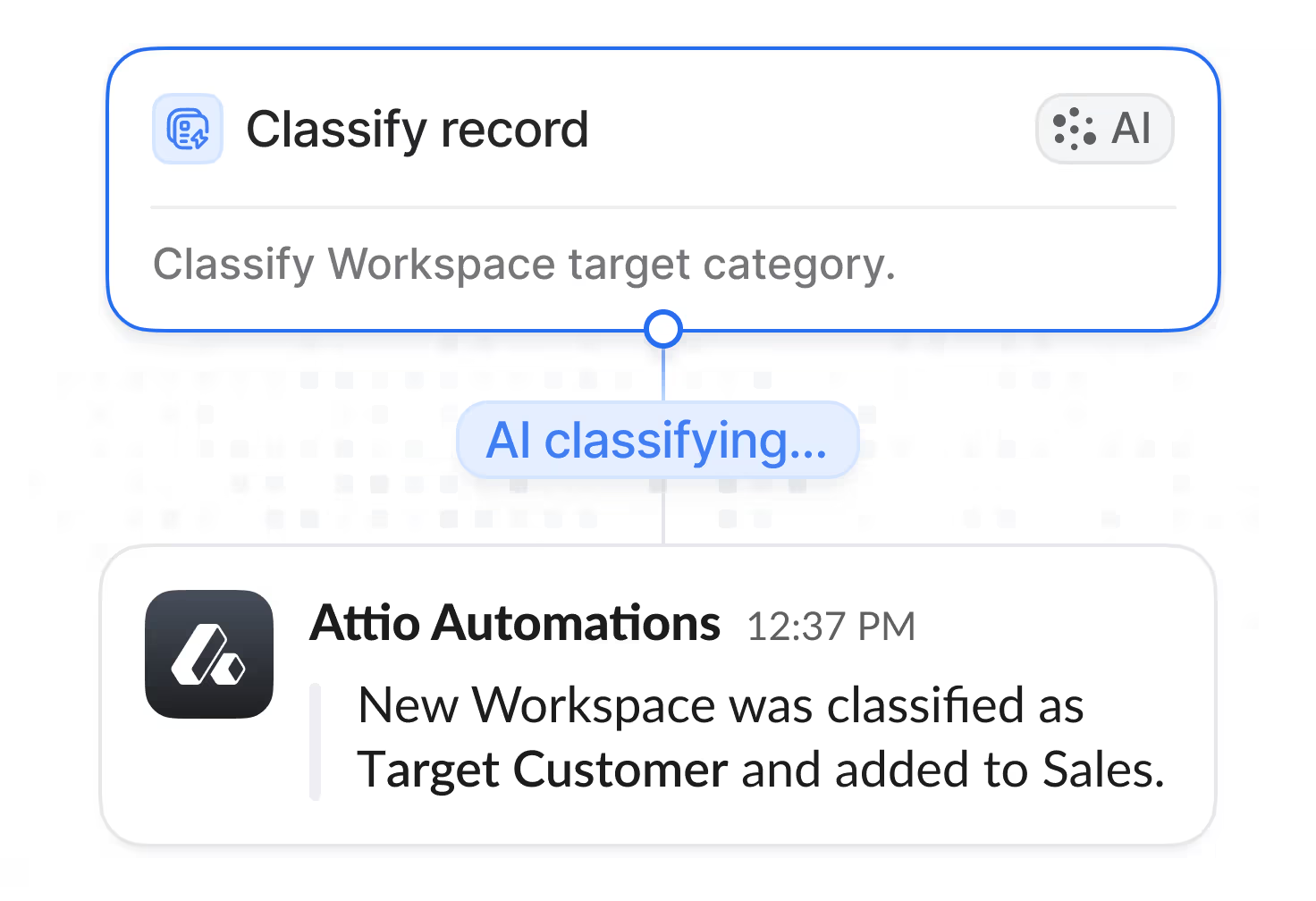
Attio seamlessly connects to external tools through its Workflows and integrations, including a Zapier integration that automates processes across thousands of applications. Zapier can initiate workflows based on changes in Attio or transfer data from other systems into Attio. For those looking to create custom solutions, Attio offers a public REST API and supports real-time subscriptions via webhooks. Additionally, the developer platform features an App SDK, allowing apps to be embedded directly within the Attio interface. This provides startups with both no-code and developer-friendly options for automation and data synchronization.
フォークCRM:2026年スタートアップ向け最高のCRM
folk is a cutting-edge CRM designed specifically for startups, seamlessly integrating relationships across Gmail, Google Calendar, LinkedIn, and spreadsheets. It consolidates contacts, companies, deals, notes, files, and every interaction into a single, lightweight workspace, ensuring that pipeline context remains linked to real conversations rather than being scattered across multiple tabs.
Key features that startups love about folk
- Automatic activity timelines through Gmail + Google Calendar sync
- Effortless LinkedIn contact capture using a Chrome extension
- Contact enrichment for quicker data completion
- Deduplication to maintain a clean database as your volume increases
- Customizable pipelines and fields tailored to any go-to-market strategy
For startups, folk excels in speed-to-value and daily usability. Quick setup, flexible workflows, and accessible multichannel context prevent the CRM from becoming cumbersome. This leads to more consistent follow-ups, cleaner data, and clearer revenue visibility with reduced friction.

結論
In conclusion, while Salesforce offers extensive customization and governance suitable for larger teams, and Attio provides a flexible, data-centric approach perfect for dynamic relationships, neither matches the efficiency of folk. Folk excels in email integration, automation, and seamless sequencing, making it the ideal choice for startups. Its user-friendly interface, quick setup, and powerful multichannel context capture ensure that teams can maintain consistent follow-ups and clean data without the administrative burden. Choose folk for streamlined, effective CRM management.
フォークCRMを発見
あなたのチームがこれまで持っていなかったような販売アシスタントのように