最后更新
一月28%,2026
X

Zoho CRM vs HubSpot: Which CRM for agencies wins?

探索Folk——专为以人为本的企业打造的客户关系管理平台

Agencies don’t struggle with “finding tools.” They struggle with maintaining seamless execution across their sales pipelines while ensuring client delivery remains on track. When critical prospect information is scattered across emails, calendars, and spreadsheets, follow-ups are missed, handoffs falter, and forecasting turns into a guessing game. A CRM for agencies must not only accelerate new business but also preserve sufficient account history to support renewals, upsells, and referrals.

Zoho CRM and HubSpot are two prominent solutions addressing these challenges from different perspectives. Zoho CRM offers a highly flexible platform tailored for agencies needing robust pipeline management, activity tracking, and extensive automation capabilities. In contrast, HubSpot merges sales, marketing, and service functions into a cohesive ecosystem, perfect for agencies seeking an all-in-one solution for tracking leads, managing campaigns, and generating reports.

The right choice between Zoho CRM and HubSpot hinges on your agency's specific needs, such as the complexity of processes, customization requirements, and the level of ongoing management your team can commit to.

什么是Zoho CRM?

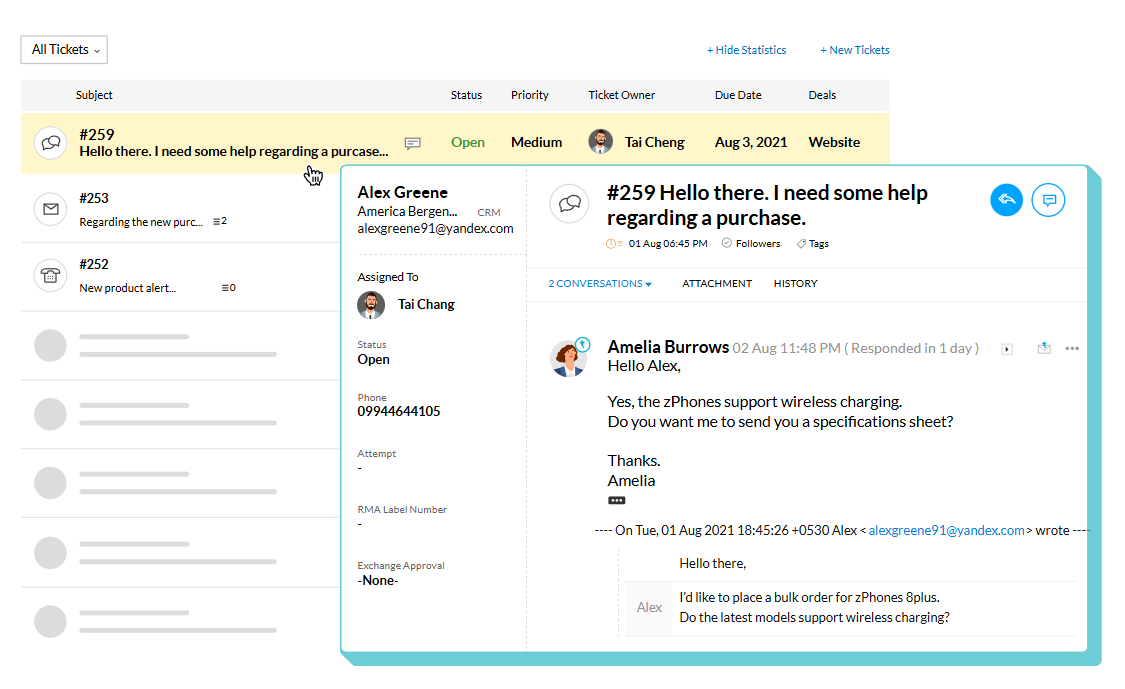
Zoho CRM 销售管道

Zoho CRM is a versatile customer relationship management tool that integrates seamlessly within the wider Zoho business software ecosystem. It's ideal for agencies seeking features like pipeline management, activity tracking, automation rules, and reporting, while also offering connectivity with other Zoho applications when required. With support for multiple pipelines and layouts, it can accommodate various service lines or sales strategies. Additionally, marketplace extensions and integrations enable connections to external tools beyond the Zoho suite. This makes it a popular choice for agencies looking for extensive functionality with flexibility across sales, operations, and reporting.

什么是HubSpot?

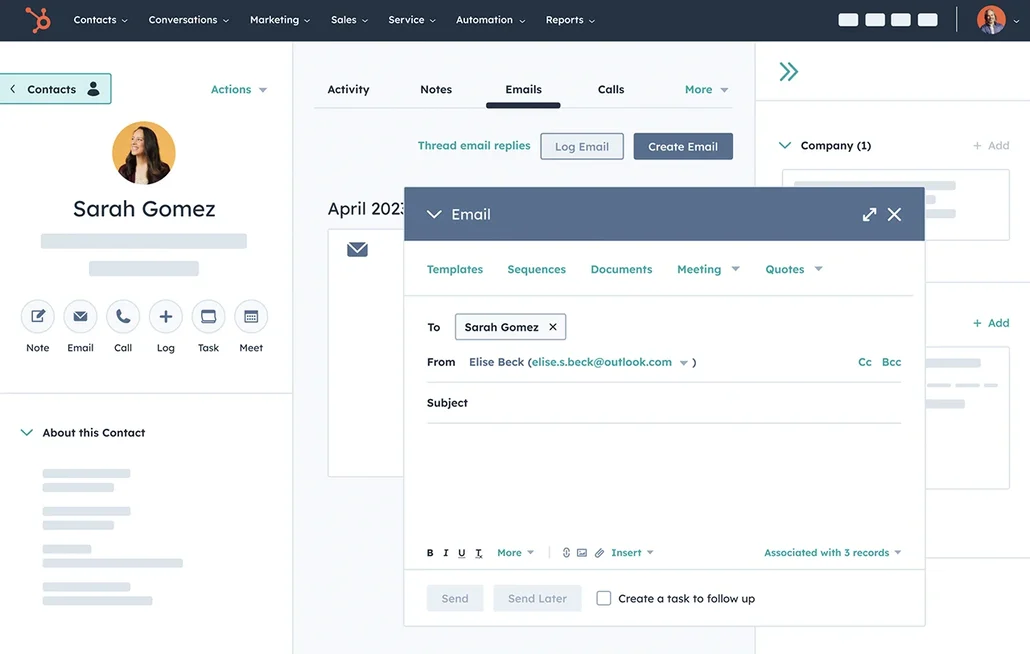
HubSpot CRM 销售管道

HubSpot is a comprehensive CRM platform that merges sales tools with marketing and service capabilities within a unified ecosystem. It's particularly well-suited for agencies requiring pipeline tracking, lead capture, email campaigns, and lifecycle reporting all in one location. Teams can customize pipelines, record activities, and automate follow-up tasks using workflows, depending on their subscription plan. The app marketplace also accommodates popular agency tools and client-facing systems. This platform is often preferred by agencies seeking to combine their CRM needs with additional go-to-market tools from a single provider.

Feature comparison of Zoho CRM and HubSpot

Multi-pipeline and custom stages

Zoho CRM enables the management of multiple sales pipelines, allowing teams to rename, add, remove, and reorder stages as their processes evolve. This flexibility includes associating pipelines with specific layouts, ensuring different sales motions are kept distinct while utilizing the same Deals module. Changes to stages are handled in the pipeline settings, and any removed stages remain accessible in the stage builder, making it ideal for agencies that require unique stage logic for each service line or motion.

HubSpot also offers deal pipelines structured around stages, which can be created and managed within pipeline settings. Deals progress through the established stages, and agencies can edit stage definitions to reflect their specific processes for qualifying and closing work. Additionally, separate pipelines can be employed to track various processes, such as new business compared to renewals, or different service lines, maintaining distinct stages for each pipeline.

客户与交易活动追踪

Activity tracking in Zoho CRM centers around tasks, events, and calls, which can be easily reviewed within CRM views and record-related lists. The activity views in Zoho CRM organize items by their creation time, enabling users to open an activity and access related details such as notes, history, attachments, upcoming actions, and email conversations. Additionally, Closed Activities lists highlight completed tasks, calls, and meetings associated with a record, ensuring a consistent log of past events and scheduled follow-ups.

In contrast, HubSpot captures activities on record timelines, allowing users to log and associate calls, emails, meetings, notes, and tasks with contacts, companies, and deals. This activity data can populate properties like the last activity date based on logged interactions. Users can filter activity timelines and associate activities across related records, ensuring that a deal and its corresponding contact share the same logged context.

自动化与工作流

Zoho CRM offers robust reporting features, including standard reports by module and customizable options tailored to your business needs. Its dashboards and analytics capabilities allow you to track your pipeline and compare sales metrics, including the forecast reporting concepts outlined in Zoho's analytics resources. For more advanced reporting, Zoho Analytics can integrate with Zoho CRM data, enabling the creation of additional reports and dashboards, along with sharing and scheduling options based on your setup. The visibility of your pipeline is influenced by how deals, stages, and activities are configured.

HubSpot provides workflows to automate tasks across marketing, sales, and service processes, available based on your subscription tier. You can create workflows using templates or the workflow editor, which are then triggered by record events or property changes. Workflow actions may include tasks, notifications, and record updates, with certain types or actions linked to specific hubs and plan levels.

报告与分析

Zoho CRM offers a variety of standard reports categorized by module, along with the flexibility to customize reports according to your business needs. Its dashboards and analytics features enable you to monitor your sales pipeline and compare key metrics, including the forecast reporting concepts outlined in Zoho’s analytics resources. For more comprehensive reporting, Zoho Analytics can integrate with Zoho CRM data, allowing you to create additional reports and dashboards, with options for sharing and scheduling tailored to your configuration. The visibility of your pipeline is influenced by how deals, stages, and activities are set up.

On the other hand, HubSpot delivers sales reporting through its dashboards, sales analytics suite, and custom reporting tools. Users can save reports to their dashboards and share them with others who have access. With the report builder, you can create custom reports to analyze CRM objects and activities, utilizing filtering and dataset selection based on your specific reporting requirements.

集成与数据卫生

Zoho CRM offers integrations through the Zoho Marketplace and its integrations layer, which organizes connectors and extensions by specific use cases. It features duplication management tools, including duplicate checks, merge tools, and an auto-merge de-duplicate tool that identifies and merges exact matches, while allowing for manual conflict resolution when necessary. Additionally, Zia data enrichment can enhance records by adding company context fields based on configured mappings, depending on the enabled features. These functionalities are designed to minimize duplicates and enhance record completeness over time.

Similarly, HubSpot connects with external tools via its app marketplace, which categorizes integrations for sales, marketing, and operations. To maintain data hygiene, HubSpot provides robust data quality tools, including deduplication workflows for identifying and managing duplicates, as well as tools for detecting formatting issues and enrichment coverage based on the chosen plan. These features fall under Data Management and Data Quality, where teams can assess issues and implement fixes to records and properties.

folk:2026年最佳代理机构客户关系管理解决方案!

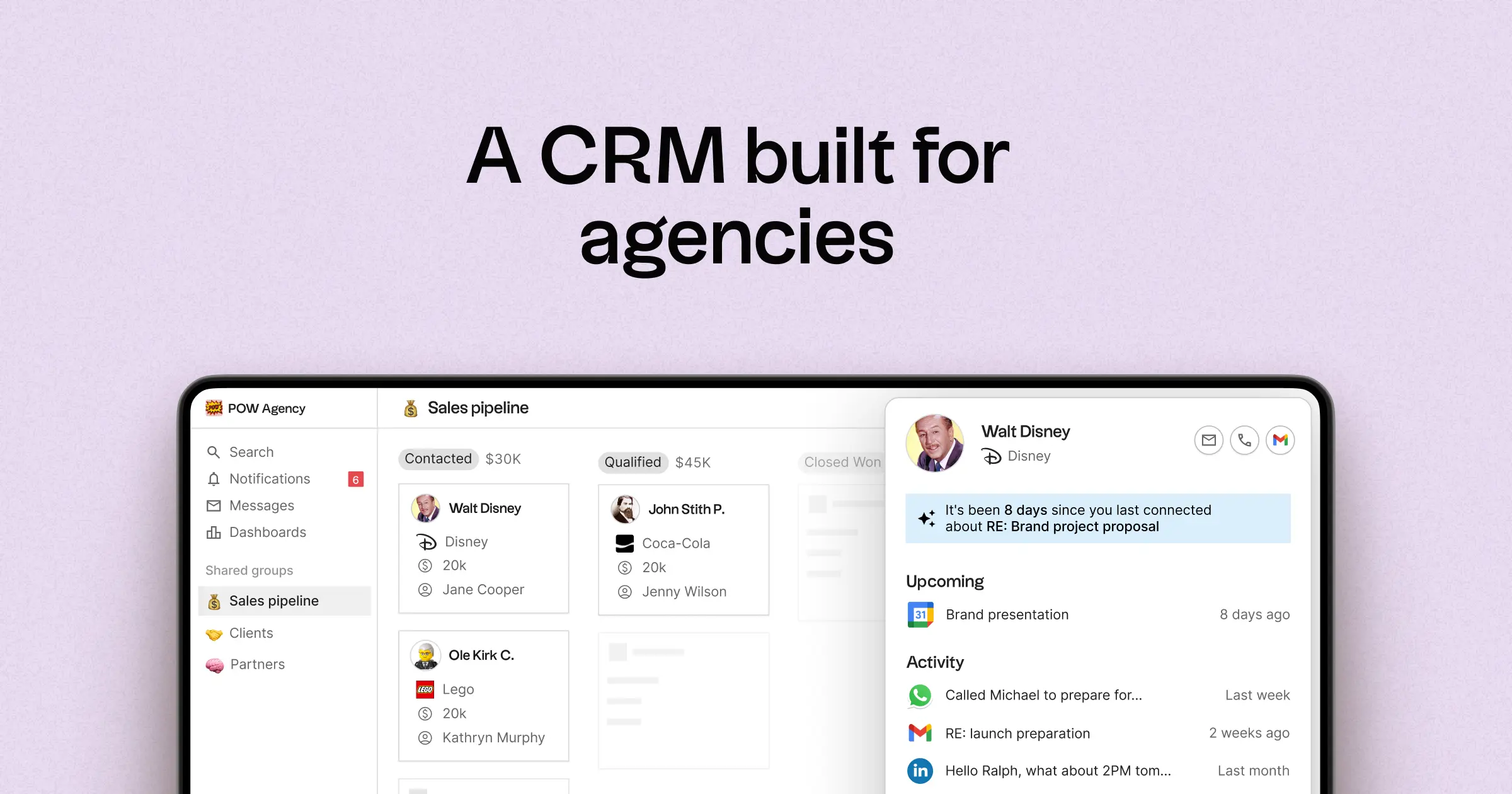
folk is an AI-driven CRM designed to streamline the management of contacts, conversations, and deal contexts without complicating the setup process. It caters to agency teams where multiple members engage with the same account throughout prospecting, onboarding, delivery, and renewals. The system maintains a clear relationship history, ensuring that handoffs rely on documented information rather than memory or fragmented notes.

  • Multi-pipeline capabilities with custom stages tailored for various agency operations
  • Contact and deal timelines that consolidate interaction histories in one place
  • 电子邮件和日历同步功能,用于将对话关联至相应的记录
  • Tasks, reminders, and follow-up tracking to ensure consistent next steps
  • Contact enrichment to complete missing company and contact details
  • Deduplication tools to merge duplicates and maintain a tidy database
  • Simple pipeline reporting for monitoring stage health and deal progression
  • 集成与自动化连接器,以最大限度减少手动更新

For agencies, the primary benefit is enhanced operational clarity across multiple relationships. Pipelines can effectively represent various revenue streams such as retainers, projects, partnerships, and referrals, while tasks and reminders ensure follow-ups are consistent among team members. Data hygiene features like enrichment and deduplication help eliminate duplicate records and fill in missing fields, keeping pipeline reporting accurate and useful over time.

结论

In summary, Zoho CRM excels in flexibility and extensive automation, ideal for agencies needing robust pipeline management. HubSpot offers a unified solution merging sales, marketing, and service, perfect for those wanting an all-in-one approach. However, for teams that prioritize email integration, automation, and a clear view of client interactions, folk stands out as the best alternative. With its focus on relationship management and streamlined operations, folk ensures agency teams can maintain efficiency and clarity across their pipelines.

立即开启14天免费试用,或预约产品演示

免费试用